Tag Archives: 15E

Tropical Storm Max Brings Wind and Rain to Southern Mexico

Tropical Storm Max brought wind and rain to southern Mexico on Monday afternoon. At 5:00 p.m. EDT on Monday the center of Tropical Storm Max was located at latitude 17.6°N and longitude 101.0°W which put it about 40 miles (65 km) east of Zihuantenajo, Mexico. Max was moving toward the north-northeast at 7 m.p.h. (11 km/h). The maximum sustained wind speed was 60 m.p.h. (95 km/h) and there were wind gusts to 75 m.p.h. (120 km/h). The minimum surface pressure was 995 mb.

A Tropical Storm Warning was in effect for the portion of the coast from Acapulco to Lazaro Cardenas, Mexico.

The center of Tropical Storm Max made landfall on the coast of Mexico between Petatlan and Papanoa on Monday afternoon. The maximum sustained wind speed in Tropical Storm Max at the time of landfall was 60 m.p.h. (95 km/h). Winds to tropical storm force extended out 60 miles (95 km) from the center of Max’s circulation. A weather station at Puerto Vicente Guerrero reported a sustained wind speed of 41 m.p.h. (66 km/h) and a wind gust of 72 m.p.h. (116 km/h).

Tropical Storm Max will move around the western side of a high pressure system over the Caribbean Sea and Mexico. The high pressure system will steer max toward the north-northeast during the next 24 hours. On its anticipated track, Tropical Storm Max will move inland over Guerrero during Monday night.

Tropical Storm Max will weaken rapidly when it moves over the Sierra Madre del Sur mountains in Gurrero. Even though Max will weaken rapidly, the tropical storm is likely to drop locally heavy rain in parts of Guerrero. The heaviest rain will fall in places where the winds push the air up the slopes of mountains. The heavy rain is likely to cause flash floods in some locations.

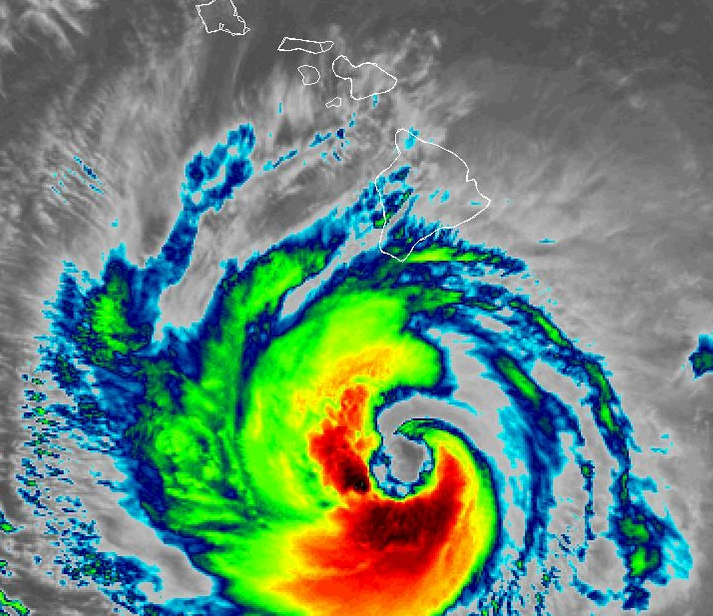
Elsewhere over the Eastern North Pacific Ocean, Tropical Storm Lidia was on the threshold of intensifying to a hurricane south of Baja California. At 5:00 p.m. EDT on Monday the center of Tropical Storm Lidia was located at latitude 18.1°N and longitude 110.9°W which put it about 340 miles (545 km) south of Cabo San Lucas, Mexico. Lidia was moving toward the east-northeast at 8 m.p.h. (13 km/h). The maximum sustained wind speed was 70 m.p.h. (110 km/h) and there were wind gusts to 85 m.p.h. (135 km/h). The minimum surface pressure was 985 mb.

Tropical Storm Lidia is forecast to intensify to a hurricane as it moves toward the west coast of Mexico on Monday night. A Hurricane Warning is in effect for the portion of the coast from Playa Perula to Escuinapa, Mexico. A Hurricane Warning is also in effect for Las Islas Marias. A Tropical Storm Warning is in effect for the portion of the coast from Escuinapa to Bahia Tempehuaya, Mexico. A Tropical Storm Warning is also in effect for the portion of the coast from Manzanillo to Playa Perula, Mexico.

Tropical Storm Max Approaches Mexico

Tropical Storm Max was approaching the coast of Mexico near Zihuatanejo on Monday morning. At 11:00 a.m. EDT on Monday the center of Tropical Storm Max was located at latitude 17.1°N and longitude 101.2°W which put it about 50 miles (80 km) south-southeast of Zihuantenajo, Mexico. Max was moving toward the north-northeast at 5 m.p.h. (8 km/h). The maximum sustained wind speed was 60 m.p.h. (95 km/h) and there were wind gusts to 75 m.p.h. (120 km/h). The minimum surface pressure was 996 mb.

A Tropical Storm Warning was in effect for the portion of the coast from Acapulco to Punta San Telmo, Mexico.

Tropical Storm Max intensified as it neared the coast of southwest Mexico near Zihuatanejo on Monday morning. A rainband wrapped around the southern part of the center of Max’s circulation. Bands of showers and thunderstorms were revolving around the center of Tropical Storm Max. Storms near the center of circulation generated upper level divergence that pumped mass away from the tropical storm. Winds to tropical storm force extended out 60 miles (95 km) from the center of Max’s circulation.

Tropical Storm Max will move around the western side of a high pressure system over the Caribbean Sea and Mexico. The high pressure system will steer max toward the north-northeast during the next 24 hours. On its anticipated track, Tropical Storm Max will make landfall on the coast of Mexico near Zihuatenajo in a few hours.

Tropical Storm Max will move through an environment favorable for intensification until it makes landfall. Max will move over water where the Sea Surface Temperatures are near 30°C. It will move under the southern part of an upper level ridge that extends from Mexico to the Eastern North Pacific Ocean. The ridge will produce easterly winds that will blow toward the top of Max’s circulation. Those winds will cause some vertical wind shear, but the wind shear will not be enough to prevent intensification. Tropical Storm Max could intensify a little more before it makes landfall in Mexico.

Tropical Storm Max will bring gusty winds to the coast of southwest Mexico. Max will also drop heavy rain of parts of Guerrero and Michoacan. Heavy rain is likely to cause flash floods in some locations. Tropical Storm Max could cause a storm surge of up to 6 feet (1.8 meters) along the coast near Zihuatanejo.

Elsewhere over the Eastern North Pacific Ocean, Tropical Storm Lidia started to move northeast toward the west coast of Mexico. At 11:00 a.m. EDT on Monday the center of Tropical Storm Lidia was located at latitude 18.5°N and longitude 111.8°W which put it about 350 miles (525 km) south-southwest of Cabo San Lucas, Mexico. Lidia was moving toward the northeast at 6 m.p.h. (10 km/h). The maximum sustained wind speed was 65 m.p.h. (105 km/h) and there were wind gusts to 80 m.p.h. (130 km/h). The minimum surface pressure was 992 mb.

Tropical Storm Lidia is forecast to intensify to a hurricane as it moves toward the west coast of Mexico. A Hurricane Warning is in effect for the portion of the coast from Playa Perula to Escuinapa, Mexico. A Hurricane Warning is also in effect for Las Islas Marias. A Tropical Storm Warning is in effect for the portion of the coast from Escuinapa to Bahia Tempehuaya, Mexico. A Tropical Storm Warning is also in effect for the portion of the coast from Manzanillo to Playa Perula, Mexico.

Tropical Storm Max Forms Near Southwest Mexico

Tropical Storm Max formed over the Eastern North Pacific Ocean near the coast of southwest Mexico on Sunday night. At 11:00 p.m. EDT on Sunday the center of Tropical Storm Max was located at latitude 16.3°N and longitude 101.9°W which put it about 100 miles (160 km) south-southwest of Zihuantenajo, Mexico. Max was moving toward the north-northwest at 6 m.p.h. (10 km/h). The maximum sustained wind speed was 40 m.p.h. (65 km/h) and there were wind gusts to 50 m.p.h. (80 km/h). The minimum surface pressure was 1001 mb.

A Tropical Storm Warning was in effect for the portion of the coast from Acapulco to Punta San Telmo, Mexico.

A low pressure system over the Eastern North Pacific Ocean near the southwest coast of Mexico strengthened during Sunday evening and the U.S. National Hurricane Center designated the system as Tropical Storm Max. More thunderstorms formed near the center of Tropical Storm Max on Sunday evening. Bands of showers and thunderstorms were revolving around the center of Max’s circulation. Storms near the center of circulation generated upper level divergence that pumped mass away from the tropical storm. Wind to tropical storm force extended out 105 miles (165 km) from the center of Max.

Tropical Storm Max will move around the western side of a high pressure system over the Caribbean Sea and Mexico. The high pressure system will steer max toward the north during the next 24 hours. On its anticipated track, Tropical Storm Max will make landfall on the coast of Mexico west of Zihuatenajo on Monday evening.

Tropical Storm Max will move through an environment favorable for intensification during the next 18 hours. Max will move over water where the Sea Surface Temperatures are near 30°C. It will move under the southern part of an upper level ridge that extends from Mexico to the Eastern North Pacific Ocean. The ridge will produce easterly winds that will blow toward the top of Max’s circulation. Those winds will cause some vertical wind shear, but the wind shear will not be enough to prevent intensification. Tropical Storm Max is likely to intensify before it makes landfall in Mexico.

Tropical Storm Max will bring gusty winds to the coast of southwest Mexico. Max will also drop heavy rain of parts of Guerrero and Michoacan. Heavy rain is likely to cause flash floods in some locations.

Elsewhere over the Eastern North Pacific Ocean, Tropical Storm Lidia continued to meander south of Baja California. At 11:00 p.m. EDT on Sunday the center of Tropical Storm Lidia was located at latitude 18.2°N and longitude 112.6°W which put it about 370 miles (595 km) south-southwest of Cabo San Lucas, Mexico. Lidia was moving toward the north at 7 m.p.h. (11 km/h). The maximum sustained wind speed was 70 m.p.h. (110 km/h) and there were wind gusts to 85 m.p.h. (135 km/h). The minimum surface pressure was 990 mb.

Tropical Storm Lidia is forecast to start to move toward the northeast on Monday and to strengthen to a hurricane. A Hurricane Watch is in effect for Las Islas Marias and the portion of the coast from Playa Perula to Mazatlan, Mexico. Tropical Storm Watches are in effect for the portions of the coast from Manzanillo to Playa Perula and from Bahia Tempehuaya to Mazatlan, Mexico.

Tropical Storm Lidia Meanders South of Baja California

Tropical Storm Lidia meandered over the Eastern North Pacific Ocean south of Baja California on Saturday. At 11:00 a.m. EDT on Saturday the center of Tropical Storm Lidia was located at latitude 16.2°N and longitude 112.2°W which put it about 485 miles (780 km) south-southwest of Cabo San Lucas, Mexico. Lidia was moving toward the west-northwest at 5 m.p.h. (8 km/h). The maximum sustained wind speed was 65 m.p.h. (105 km/h) and there were wind gusts to 80 m.p.h. (130 km/h). The minimum surface pressure was 995 mb.

Tropical Storm Lidia meandered slowly south of Baja California on Saturday. The distribution of thunderstorms in Tropical Storm Lidia continued to be asymmetrical on Saturday. Many of the thunderstorms were occurring in a bands in the southern and western parts of Lidia’s circulation. Bands in the northern and eastern parts of Tropical Storm Lidia consisted primarily of showers and lower clouds. Storms near the center of Lidia’s circulation generated upper level divergence that pumped mass away from the tropical storm. Winds to tropical storm force extended out 105 miles (165 km) from the center of Lidia’s circulation.

Tropical Storm Lidia will move through an environment that will be marginally favorable for intensification during the next 24 hours. Lidia will move over water where the Sea Surface Temperatures are near 29°C. It will move under the southern part of an upper level ridge that extends from Mexico to the Eastern North Pacific Ocean. The ridge will produce easterly winds that will blow toward the top of Lidia’s circulation. Those winds will continue to cause moderate vertical wind shear. The wind shear is likely to inhibit intensification of Tropical Storm Lidia during the next 24 hours.

Tropical Storm Lidia will be in an area where the steering currents are weak during the next 24 hours. On its anticipated track, Tropical Storm Lidia is likely to continue to meander the south of Baja California on Sunday. An upper level trough west of California will move closer to Lidia on Monday. The upper level trough is likely to steer Lidia toward the northeast early next week. Lidia could approach the west coast of Mexico by Tuesday. Tropical Storm Lidia could strengthen to a hurricane as it approaches the coast of Mexico.

Tropical Storm Lidia Moves South of Baja California

Tropical Storm Lidia moved south of Baja California on Wednesday. At 11:00 p.m. EDT on Wednesday the center of Tropical Storm Lidia was located at latitude 15.6°N and longitude 109.4°W which put it about 505 miles (815 km) south of Cabo San Lucas, Mexico. Lidia was moving toward the northwest at 7 m.p.h. (11 km/h). The maximum sustained wind speed was 50 m.p.h. (80 km/h) and there were wind gusts to 65 m.p.h. (105 km/h). The minimum surface pressure was 1001 mb.

Tropical Storm Lidia strengthened gradually over the Eastern North Pacific Ocean south of Baja California on Wednesday. Even though Tropical Storm Lidia was a little stronger, the distribution of thunderstorms continued to be asymmetrical. Many of the thunderstorms were occurring in a bands in the western part of Lidia’s circulation. Bands in the eastern side of Tropical Storm Lidia consisted primarily of showers and lower clouds. More thunderstorms formed near the center of Lidia’s circulation on Wednesday evening. Storms near the center of circulation generated upper level divergence that pumped mass away from the tropical storm. Winds to tropical storm force extended out 70 miles (110 km) from the center of Lidia’s circulation.

Tropical Storm Lidia will move through an environment that will be a little more favorable for intensification during the next 24 hours. Lidia will move over water where the Sea Surface Temperatures are near 29°C. It will move under the southern part of an upper level ridge that extends from Mexico to the Eastern North Pacific Ocean. The ridge will produce easterly winds that will blow toward the top of Lidia’s circulation. Those winds will weaken a little on Thursday and there will be a little less vertical vertical wind shear. The reduction of wind shear could allow Tropical Storm Lidia intensify a little faster during the next 24 hours.

Tropical Storm Lidia will move around the western part of a high pressure system over Mexico. The high pressure system will steer Lidia toward the west-northwest during the next 24 hours. On its anticipated track, Tropical Storm Lidia will remain far to the south of Baja California on Thursday.

Tropical Storm Lidia Forms Southwest of Mexico

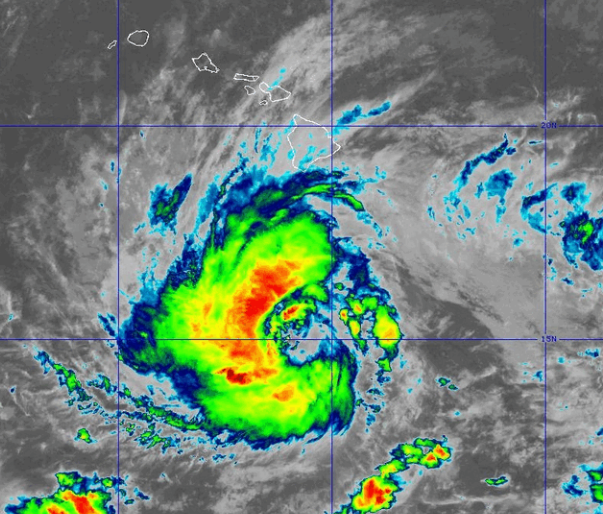
Tropical Storm Lidia formed over the Eastern North Pacific Ocean southwest of Mexico on Tuesday morning. At 5:00 a.m. EDT on Tuesday the center of Tropical Storm Lidia was located at latitude 11.°N and longitude 107.0°W which put it about 790 miles (1270 km) south-southeast of Cabo San Lucas, Mexico. Lidia was moving toward the west-northwest at 9 m.p.h. (15 km/h). The maximum sustained wind speed was 40 m.p.h. (65 km/h) and there were wind gusts to 50 m.p.h. (80 km/h). The minimum surface pressure was 1006 mb.

A low pressure system over the Eastern North Pacific Ocean southwest of Mexico strengthened on Tuesday morning and the U.S. National Hurricane Center designated the system as Tropical Storm Lidia. The distribution of thunderstorms in Tropical Storm Lidia was asymmetrical. Many of the thunderstorms were occurring in a bands in the western part of Lidia’s circulation. Bands in the eastern side of Tropical Storm Lidia consisted primarily of showers and lower clouds. Storms in the bands in the western part of Lidia started to generate upper level divergence that pumped mass away to the west of the tropical storm. Wind to tropical storm force extended out 35 miles (55 km) in the western side of Lidia’s circulation. The winds in the eastern part of the circulation were blowing at less than tropical storm force.

Tropical Storm Lidia will move through an environment somewhat favorable for intensification during the next 24 hours. Lidia will move over water where the Sea Surface Temperatures are near 30°C. It will move over the southern part of an upper level ridge that extends from Mexico to the Eastern North Pacific Ocean. The ridge will produce easterly winds that will blow toward the top of Lidia’s circulation. Those winds are contributing to the asymmetrical distribution of thunderstorms and they will continue to cause moderate vertical wind shear. The wind shear will inhibit intensification, but the shear may not be enough to stop Lidia from strengthening. Tropical Storm Lidia could intensify gradually during the next 24 hours.

Tropical Storm Lidia will move around the western part of a high pressure system over Mexico. The high pressure system will steer Lidia toward the west-northwest during the next 24 hours. On its anticipated track, Tropical Storm Lidia will move farther away from the west coast of Mexico.

Tropical Storm Newton Moves South of Baja California

Tropical Storm Newton moved south of Baja California on Thursday. At 5:00 p.m. EDT on Thursday the center of Tropical Storm Newton was located at latitude 18.0°N and longitude 109.0°W which put it about 345 miles (550 km) south of the southern tip of Baja California. Newton was moving toward the west-northwest at 7 m.p.h. (11 km/h). The maximum sustained wind speed was 60 m.p.h. (95 km/h) and there were wind gusts to 75 m.p.h. (120 km/h). The minimum surface pressure was 1000 mb.

Tropical Storm Newton strengthened on Thursday as it moved over the Eastern North Pacific Ocean south of Baja California. The circulation around Newton was small. Winds to tropical storm force extended out 45 miles (75 km) from the center of Tropical Storm Newton. Storms near the center generated upper level divergence that pumped mass away from the tropical storm. Short bands of showers and thunderstorms were revolving around the center of Newton’s circulation.

Tropical Storm Newton will move through an environment somewhat favorable for intensification during the next 24 hours. Newton will move over water where the Sea Surface Temperatures are near 27˚C. It will move through a region where the upper level winds are weak and there will be little vertical wind shear. However, there is drier air north and west of Tropical Storm Newton. If the drier air gets pulled into Newton’s circulation, then it could weaken quickly because the tropical storm is so small. If the drier air remains outside of Newton’s circulation, then the tropical storm could get stronger.

Tropical Storm Newton will move around the southern side of a high pressure system over Mexico. The high pressure system will steer Newton toward the west during the next 48 hours. On its anticipated track Tropical Storm Newton will move farther away from Baja California.

Tropical Storm Newton Forms Southwest of Mexico

Tropical Storm Newton formed over the Eastern North Pacific Ocean southwest of Mexico on Wednesday evening. At 11:00 p.m. EDT on Wednesday the center of Tropical Storm Newton was located at latitude 17.6°N and longitude 107.0°W which put it about 200 miles (325 km) west-southwest of Manzanillo, Mexico. Newton was moving toward the west-northwest at 13 m.p.h. (20 km/h). The maximum sustained wind speed was 50 m.p.h. (80 km/h) and there were wind gusts to 65 m.p.h. (105 km/h). The minimum surface pressure was 1002 mb.

An area of low pressure over the Eastern North Pacific Ocean southwest of Mexico strengthened on Wednesday evening and the National Hurricane Center designated the system as Tropical Storm Newton. Thunderstorms were developing near the center of Tropical Storm Newton. Other thunderstorms formed in bands revolving around the center of Newton’s circulation. Storms near the center generated upper level divergence that pumped mass away from the tropical storm. Winds to tropical storm force extended out 60 miles (95 km) in the northern side of Tropical Storm Newton. The winds in the southern side of the circulation were blowing at less than tropical storm force.

Tropical Storm Newton will move through an environment favorable for intensification during the next 24 hours. Newton will move over water where the Sea Surface Temperatures are near 27˚C. It will move through a region where the upper level winds are weak and there will be little vertical wind shear. Tropical Storm Newton is likely to intensify during the next 24 hours. Newton will move over cooler water on Friday and it will start to weaken.

Tropical Storm Newton will move around the southern side of a high pressure system over Mexico. The high pressure system will steer Newton toward the west-northwest during the next 48 hours. On its anticipated track Tropical Storm Newton will pass south of Baja California on Friday.

Olaf Weakens to Tropical Storm over Southern Baja California

Former Hurricane Olaf weakened to a tropical storm when it passed over southern Baja California on Friday. At 2:00 p.m. EDT on Friday the center of Tropical Storm Olaf was located at latitude 24.5°N and longitude 112.2°W which put it about 20 miles (30 km) south-southeast of Cabo San Lazaro, Mexico. Olaf was moving toward the northwest at 12 m.p.h. (19 km/h). The maximum sustained wind speed was 50 m.p.h. (80 km/h) and there were wind gusts to 80 m.p.h. (130 km/h). The minimum surface pressure was 997 mb.

A Tropical Storm Warning was in effect for the portion of the coast from Puerto San Andresito to Loreto. The Tropical Storm Warning included Cabo San Lucas and La Paz.

Former Hurricane Olaf weakened on Friday when the circulation passed over mountains in the southern part of Baja California. The low level center of circulation of Tropical Storm Olaf was visible on satellite images. The low level center was back over the Eastern North Pacific Ocean near Cabo San Lazaro. There were mainly showers and lower clouds near the low level center. Most of the thunderstorms were occurring in bands on the eastern side of Olaf that were over Baja California and the Gulf of California. Winds to tropical storm force extended out 70 miles (110 km) from the center of circulation. A weather station in Puerto Cortes, Mexico recently reported a sustained wind speed of 44 m.p.h. (70 km/h) and a wind gust of 53 m.p.h. (85 km/h).

Tropical Storm Olaf will move through an environment unfavorable for intensification during the next several days. Olaf will move over water where the Sea Surface Temperature is near 25˚C. The air over the cooler water is drier and more stable. Drier, more stable air will inhibit the develop of thunderstorms. If new thunderstorms do not form near the center of Tropical Storm Olaf during the next 12 hours, it will gradually weaken. Olaf is forecast to weaken to a tropical depression on Saturday.

The future track of Tropical Storm Olaf will depend on how fast Olaf weakens. If no new thunderstorms develop near the center of Olaf, then the tropical storm will be steered by the winds in the lower levels of the atmosphere. A surface high pressure system over the Eastern North Pacific Ocean is forecast to steer Tropical Storm Olaf toward the west-southwest during the weekend. On its anticipated track Tropical Storm Olaf will gradually move away from Baja California.

Hurricane Olaf Makes Landfall on Southern Tip of Baja California

Hurricane Olaf made landfall on southern tip of Baja California on Thursday night. At 11:00 p.m. EDT on Thursday the center of Hurricane Olaf was located at latitude 23.0°N and longitude 109.6°W which put it about 20 miles (30 km) east-northeast of Cabo San Lucas, Mexico. Olaf was moving toward the northwest at 12 m.p.h. (19 km/h). The maximum sustained wind speed was 100 m.p.h. (160 km/h) and there were wind gusts to 120 m.p.h. (195 km/h). The minimum surface pressure was 974 mb.

A Hurricane Warning Was in effect for the portion of the coast from Los Barriles to Cabo San Lazaro, Mexico. The Hurricane Warning included Cabo San Lucas. Tropical Storm Warnings were in effect for the portions of the coast from Cabo San Lazaro to Puerto San Andresito, Mexico and from Los Barriles to Loreto, Mexico.

The eye of Hurricane Olaf made landfall on the southern tip of Baja California near San Jose del Cabo on Thursday night. Olaf continued to intensify right up until the center moved ashore. Hurricane Olaf strengthened to Category 2 on the Saffir-Simpson Scale prior to landfall. Winds to hurricane force extended out 35 miles (55 km) from the center of Olaf. Winds to tropical storm force extended out 105 miles (165 km) from the center of circulation. The Hurricane Intensity Index (HII) for Hurricane Olaf was 16.5. The Hurricane Size Index (HSI) was 10.5 and the Hurricane Wind Intensity Size Index (HWISI) was 27.0

Hurricane Olaf was capable of causing regional serious damage. Olaf will produce strong winds over the southern part of Baja California. Wind damage could cause widespread power outages. Hurricane Olaf will also drop heavy rain over the region and flash floods are likely to occur. Hurricane Olaf will move northwest over Baja California during the next 24 hours. Mountains will begin to disrupt the circulation and Olaf will weaken. The area of heavy rain will move northward, as will the risk for flash floods.