Tag Archives: EP16

Tropical Storm Raymond Moves West of Mexico

Tropical Storm Raymond moved west of Mexico on Friday afternoon.  At 5:00 p.m. EDT on Friday the center of Tropical Storm Raymond was located at latitude 19.1°N and longitude 106.5°W which put the center about 145 miles (230 km) west of Manzanillo, Mexico.  Raymond was moving toward the northwest at 17 m.p.h. (28 km/h).  The maximum sustained wind speed was 50 m.p.h. (80 km/h) and there were wind gusts to 65 m.p.h. (105 km/h).  The minimum surface pressure was 1000 mb.

A Tropical Storm Warning was in effect for the portion of the coast from Manzanillo to Cabo Corrientes, Mexico.  A Tropical Storm Warning was in effect for Las Islas Marias.  A Tropical Storm Warning was in effect for the portion of the coast from Los Barriles to Santa Fe, Mexico.

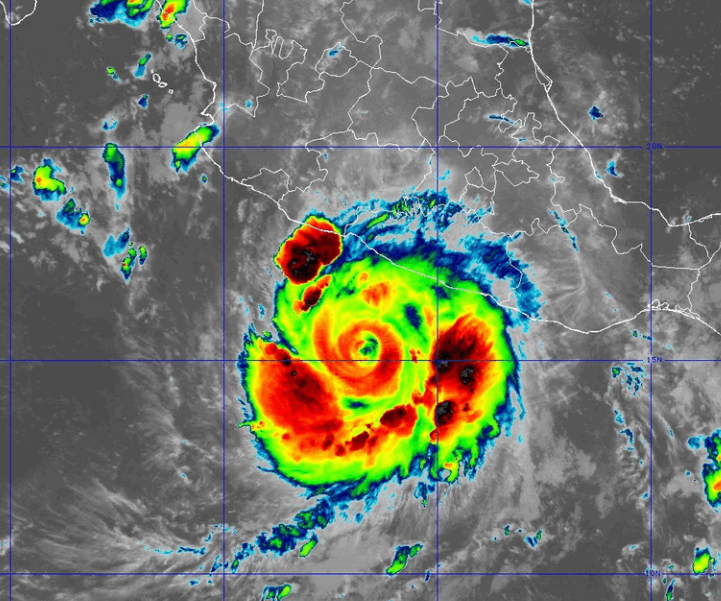
The distribution of thunderstorms in Tropical Storm Raymond was still asymmetrical on Friday afternoon. Thunderstorms were occurring in bands in the southern and western parts of Raymond’s circulation.  Bands in the northern and eastern parts of Tropical Storm Raymond consisted primarily of shower and lower clouds.  Storms near the center of Raymond generated some upper level divergence that pumped mass away to the west of the tropical storm.

The circulation around Tropical Storm Raymond was small.  Winds to tropical storm force extended out 80 miles (130 km) from the center of Raymond’s circulation.

Tropical Storm Raymond will move through an environment that will be only marginally favorable for intensification during the next 24 hours.  Raymond will move over water where the Sea Surface Temperatures are near 28°C.  It will move under the southwestern part of an upper level ridge that is over Mexico.  The upper level ridge will produce easterly winds that will blow toward the top of Raymond’s circulation.  Those winds will cause strong vertical wind shear.  The strong wind shear will inhibit intensification. Tropical Storm Raymond is likely to weaken on Saturday because of the strong vertical wind shear.

Tropical Storm Raymond will move around the western side of a high pressure system that is over Mexico.  The high pressure system will steer Raymond toward the northwest during the next 24 hours.  On its anticipated track, Tropical Storm Raymond will reach the southern end of Baja California on Saturday.

Tropical Storm Raymond will bring gust winds and locally heavy rain to the southern part of Baja California.  Heavy rain could cause flash floods in some locations.

Elsewhere over the Eastern North Pacific Ocean, former Tropical Storm Priscilla weakened west of Baja California.  At 5:00 p.m. EDT on Friday the center of Tropical Depression Priscilla was located at latitude 26.3°N and longitude 115.4°W which put the center about 220 miles (355 km) west-northwest of Cabo San Lazaro, Mexico.  Priscilla was moving toward the north at 6 m.p.h. (10 km/h).  The maximum sustained wind speed was 35 m.p.h. (55 km/h) and there were wind gusts to 45 m.p.h. (75 km/h).  The minimum surface pressure was 1004 mb.

Tropical Storm Raymond Forms South of Mexico

Tropical Storm Raymond formed over the Eastern North Pacific Ocean south of Mexico on Thursday.  At 2:00 p.m. EDT on Thursday the center of Tropical Storm Raymond was located at latitude 16.1°N and longitude 101.0°W which put the center about 115 miles (185 km) south-southeast of Zihuatanejo, Mexico.  Raymond was moving toward the northwest at 9 m.p.h. (15 km/h).  The maximum sustained wind speed was 40 m.p.h. (65 km/h) and there were wind gusts to 50 m.p.h. (80 km/h).  The minimum surface pressure was 1002 mb.

A Tropical Storm Watch is in effect for the portion of the coast from Zihuatanejo to Cabo Corrientes, Mexico.

A low pressure system over the Eastern North Pacific Ocean south of Mexico strengthened on Thursday and the U.S. National Hurricane Center designated the system as Tropical Storm Raymond.

The distribution of thunderstorms in Tropical Storm Raymond was asymmetrical.  Thunderstorms were occurring in bands in the southern and western parts of Raymond’s circulation.  Bands in the northern and eastern parts of Tropical Storm Raymond consisted primarily of shower and lower clouds.  Storms near the center of Raymond started to generate upper level divergence that pumped mass away to the west of the tropical storm.

Tropical Storm Raymond will move through an environment that will be somewhat favorable for intensification during the next 24 hours.  Raymond will move over water where the Sea Surface Temperatures are near 29°C.  It will move under the southern part of an upper level ridge that is over Mexico.  The upper level ridge will produce easterly winds that will blow toward the top of Raymond’s circulation.  Those winds will cause strong vertical wind shear.  The strong wind shear will inhibit intensification.  Tropical Storm Raymond could intensify a little on Friday if the upper level winds do not get any stronger.

Tropical Storm Raymond will move around the western side of a high pressure system that is over Mexico.  The high pressure system will steer Raymond toward the northwest during the next 24 hours.  On its anticipated track, the center of Tropical Storm Raymond will move near the coast of Mexico between Zihuatanejo and Cabo Corrientes on Friday.

Tropical Storm Raymond will bring gusty winds and locally heavy rain to coastal sections of Colima, Michoacan, and western Guerrero.

Elsewhere over the Eastern North Pacific Ocean, Tropical Storm Priscilla continued to weaken west of Baja California.  At 11:00 a.m. EDT on Thursday the center of Tropical Storm Priscilla was located at latitude 23.8°N and longitude 114.7°W which put the center about 165 miles (265 km) west-southwest of Cabo San Lazaro, Mexico.  Priscilla was moving toward the north-northwest at 8 m.p.h. (13 km/h).  The maximum sustained wind speed was 45 m.p.h. (75 km/h) and there were wind gusts to 60 m.p.h. (95 km/h).  The minimum surface pressure was 996 mb.

Priscilla Weakens to a Tropical Storm

Former Hurricane Priscilla weakened to a tropical storm over the Eastern North Pacific Ocean south of Baja California on Wednesday afternoon.  At 2:00 p.m. EDT on Wednesday the center of Tropical Storm Priscilla was located at latitude 21.7°N and longitude 112.7°W which put the center about 195 miles (310 km) west-southwest of the southern tip of Baja California.  Priscilla was moving toward the northwest at 7 m.p.h. (11 km/h).  The maximum sustained wind speed was 70 m.p.h. (110 km/h) and there were wind gusts to 85 m.p.h. (135 km/h).  The minimum surface pressure was 985 mb.

A Tropical Storm Watch was in effect for the portion of the coast from Cabo San Lucas to Cabo San Lazaro, Mexico.

Former Hurricane Priscilla rapidly weakened to a tropical storm south of Baja California on Wednesday.  Thunderstorms around the center of Priscilla’s circulation and in the northern half of the circulation weakened.  Bands in those parts of Tropical Storm Priscilla consisted primarily of showers and lower clouds.  Thunderstorms were still occurring in bands in the southern and western periphery of Priscilla’s circulation.  Weakening of the thunderstorms near the core of Tropical Storm Priscilla greatly reduced the upper level divergence.  With much less upper level divergence the inflow of mass in the lower levels of the atmosphere caused the surface pressure to increase.

The circulation around Tropical Storm Priscilla was still large.  Winds to tropical storm force extended out 160 miles (260 km) from the center of Priscilla’s circulation.

Tropical Storm Priscilla will move through an environment that will become even more unfavorable for intensification during the next 24 hours.  Priscilla will move over water where the Sea Surface Temperatures are near 26°C.  An upper level trough near the west coast of the U.S. will produce southwesterly winds that will blow toward the top of Priscilla’s circulation.  Those winds will cause the vertical wind shear to increase.  The effects of cooler water and increasing vertical wind shear will cause Tropical Storm Priscilla to continue to weaken during the next 24 hours.

Tropical Storm Priscilla will move around the western end of a high pressure system over Mexico.  The high pressure system will steer Priscilla toward the north-northwest during the next 24 hours.  On its anticipated track, Tropical Storm Priscilla will move west of Cabo San Lazaro on Thursday.

Elsewhere over the Eastern North Pacific Ocean, Tropical Storm Octave continued to gradually weaken far to the southwest of Baja California.  At 11:00 a.m. EDT on Wednesday the center of Tropical Storm Octave was located at latitude 15.4°N and longitude 116.2.°W which put the center about 660 miles (1065 km) southwest of the southern tip of Baja California.  Octave was moving toward the east at 12 m.p.h. (19 km/h).  The maximum sustained wind speed was 40 m.p.h. (65 km/h) and there were wind gusts to 50 m.p.h. (80 km/h).  The minimum surface pressure was 1003 mb.

Hurricane Priscilla Starts to Weaken

Hurricane Priscilla started to weaken on Tuesday evening.  At 11:00 p.m. EDT on Tuesday the center of Hurricane Priscilla was located at latitude 20.6°N and longitude 111.5°W which put the center about 190 miles (305 km) south-southwest of the southern tip of Baja California.  Priscilla was moving toward the northwest at 9 m.p.h. (15 km/h).  The maximum sustained wind speed was 105 m.p.h. (165 km/h) and there were wind gusts to 125 m.p.h. (200 km/h).  The minimum surface pressure was 962 mb.

A Tropical Storm Watch was in effect for the portion of the coast from Cabo San Lucas to Cabo San Lazaro, Mexico.

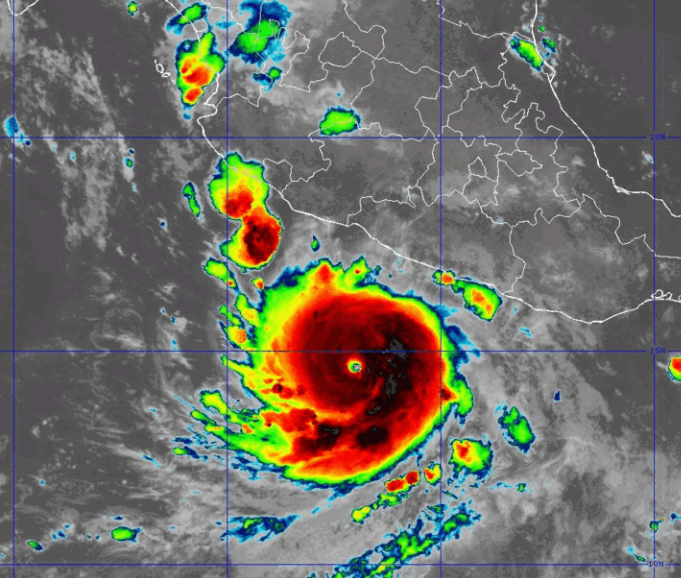
Hurricane Priscilla started to weaken on Tuesday evening after Priscilla had strengthened to Category 2 on the Saffir-Simpson Scale earlier in the day.  Hurricane Priscilla appeared to have mixed cooler water to the surface of the Eastern North Pacific Ocean.  A large eye with a diameter of 50 miles (80 km) was still present at the center of Priscilla’s circulation.  However, the ring of thunderstorms surrounding the eye was broken in several places.  Also, many of the thunderstorms in bands in the eastern side of Hurricane Priscilla had weakened.  The bands in the eastern part of Priscilla’s circulation consisted primarily of showers and lower clouds.  Thunderstorms were still occurring in bands in the western half of Hurricane Priscilla.

The circulation around Hurricane Priscilla was still large.  Winds to hurricane force extended out 45 miles (75 km) from the center of Priscilla’s circulation.  Winds to tropical storm force extended out 195 miles (315 km) from the center of Hurricane Priscilla.

The Hurricane Intensity Index (HII) for Hurricane Priscilla was 17.8.  The Hurricane Size Index (HSI) was 17.1 and the Hurricane Wind Intensity Size Index (HWISI) was 34.9.

Hurricane Priscilla will move through an environment that will become more unfavorable for intensification during the next 24 hours.  An upper level trough near the west coast of the U.S. will start to produce southwesterly winds that will blow toward the top of Priscilla’s circulation.  Those winds will cause the vertical wind shear to begin to increase.  In addition, the cooler water mixed to the surface of the ocean by Priscilla’s winds will limit the energy transfer from the ocean to the atmosphere.  The effects of cooler water and increasing vertical wind shear will cause Hurricane Priscilla to weaken during the next 24 hours.

Hurricane Priscilla will move around the western end of a high pressure system over Mexico.  The high pressure system will steer Priscilla toward the north-northwest during the next 24 hours.  On its anticipated track, Hurricane Priscilla will move parallel to the coast of southwestern Baja California on Wednesday.

Elsewhere over the Eastern North Pacific Ocean, Tropical Storm Octave weakened far to the southwest of Baja California.  At 11:00 p.m. EDT on Tuesday the center of Tropical Storm Octave was located at latitude 15.2°N and longitude 118.0.°W which put the center about 750 miles (1205 km) southwest of the southern tip of Baja California.  Octave was moving toward the east at 7 m.p.h. (11 km/h).  The maximum sustained wind speed was 45 m.p.h. (75 km/h) and there were wind gusts to 60 m.p.h. (95 km/h).  The minimum surface pressure was 1000 mb.

Hurricane Priscilla Moves South of Baja California

Hurricane Priscilla moved south of Baja California on Monday night.  At 11:00 p.m. EDT on Monday the center of Hurricane Priscilla was located at latitude 19.1°N and longitude 108.5°W which put the center about 275 miles (445 km) south-southeast of the southern tip of Baja California.  Priscilla was moving toward the northwest at 9 m.p.h. (15 km/h).  The maximum sustained wind speed was 85 m.p.h. (135 km/h) and there were wind gusts to 100 m.p.h. (160 km/h).  The minimum surface pressure was 972 mb.

A Tropical Storm Watch was in effect for the portion of the coast from Cabo San Lucas to Cabo San Lazaro, Mexico.

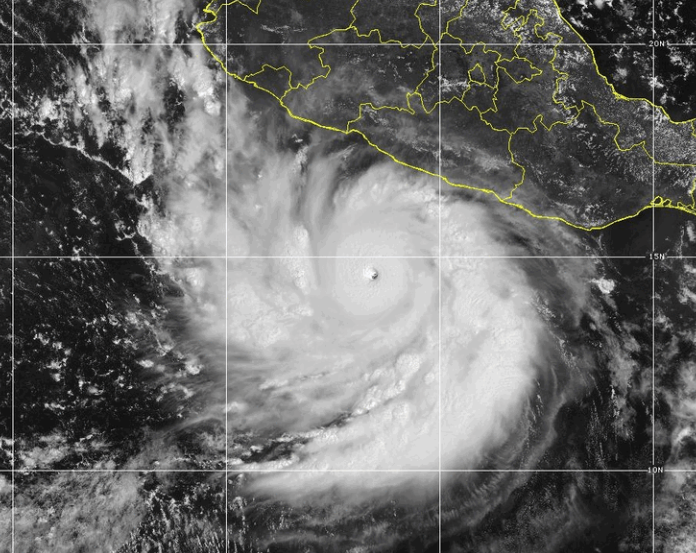
Hurricane Priscilla was showing evidence of intensification on Monday evening.  New tall thunderstorms were forming just to the south of the center of Priscilla’s circulation.  Microwave satellite imagery was indicating that an eye might be forming at the center of Hurricane Priscilla.  Bands of showers and thunderstorms were revolving around the center.  Storms near the center of Priscilla generated upper level divergence that pumped mass away from the hurricane.  The removal of mass caused the surface pressure to decrease.

The circulation around Hurricane Priscilla was very large.  Winds to hurricane force extended out 50 miles (80 km) in the eastern side of Priscilla’s circulation.  Winds to hurricane force extended out 25 miles (40 km) in the western side of Priscilla.  Winds to tropical storm force extended out 185 miles (295 km) from the center of Hurricane Priscilla.

Hurricane Priscilla will move through an environment favorable for intensification during the next 24 hours.  Priscilla will move over water where the Sea Surface Temperatures are near 28°C.  It will move under the middle of an upper level ridge over Mexico and the Eastern North Pacific Ocean.  The upper level winds are weak near the middle of the ridge and there will be little vertical wind shear.  Hurricane Priscilla will intensify during the next 24 hours.  Priscilla could strengthen to a major hurricane on Tuesday.

Hurricane Priscilla will move around the western end of a high pressure system over Mexico.  The high pressure system will steer Priscilla slowly toward the northwest during the next 24 hours.  On its anticipated track, Hurricane Priscilla will move closer to the southern part of Baja California on Tuesday.

Elsewhere over the Eastern North Pacific Ocean, former Hurricane Octave weakened back to a tropical storm on Monday.  At 11:00 p.m. EDT on Monday the center of Tropical Storm Octave was located at latitude 15.8°N and longitude 120.4°W which put the center about 840 miles (1355 km) southwest of the southern tip of Baja California.  Octave was moving toward the east-southeast at 7 m.p.h. (11 km/h).  The maximum sustained wind speed was 50 m.p.h. (80 km/h) and there were wind gusts to 65 m.p.h. (105 km/h).  The minimum surface pressure was 998 mb.

Priscilla and Octave Intensify to Hurricanes

Former Tropical Storms Priscilla and Octave both intensified to hurricanes over the Eastern North Pacific Ocean on Sunday.  At 8:00 p.m. EDT on Sunday the center of Hurricane Priscilla was located at latitude 16.5°N and longitude 107.1°W which put the center about 285 miles (460 km) south-southwest of Cabo Corrientes, Mexico.  Priscilla was moving toward the north-northwest at 3 m.p.h. (5 km/h).  The maximum sustained wind speed was 75 m.p.h. (120 km/h) and there were wind gusts to 90 m.p.h. (145 km/h).  The minimum surface pressure was 986 mb.

A Tropical Storm Watch was issued for the portion of the coast from Punta San Telmo to Punta Mita, Mexico.

Former Tropical Storm Priscilla intensified to a hurricane southwest of Mexico on Sunday.  The inner end of a rainband wrapped around the southern side of the center of Priscilla’s circulation.  An eye appeared to be forming at the center of Hurricane Priscilla.  Other bands of showers and thunderstorms were revolving around the center of Priscilla’s circulation.  Storms near the center of Priscilla generated upper level divergence that pumped mass away from the hurricane.  The removal of mass caused the surface pressure to decrease.

The strongest winds were occurring in the southeastern part of Hurricane Priscilla.  Hurricane force winds extended out 40 miles in the southeastern quadrant of Priscilla’s circulation.  Winds to tropical storm force extended out 175 miles (280 km) from the center of Hurricane Priscilla.

Hurricane Priscilla will move through an environment favorable for intensification during the next 24 hours.  Priscilla will move over water where the Sea Surface Temperatures are near 28°C.  It will move under the middle of an upper level ridge over Mexico and the Eastern North Pacific Ocean.  The upper level winds are weak near the middle of the ridge and there will be little vertical wind shear.  Hurricane Priscilla will intensify during the next 24 hours.  Priscilla could strengthen to a major hurricane by Tuesday.

Hurricane Priscilla will move around the western end of a high pressure system over Mexico.  The high pressure system will steer Priscilla slowly toward the north-northwest during the next 24 hours.  On its anticipated track, Hurricane Priscilla will move south of Baja California on Tuesday.

Elsewhere over the Eastern North Pacific Ocean, former Tropical Storm Octave also intensified to a hurricane on Sunday.  At 5:00 p.m. EDT on Sunday the center of Hurricane Octave was located at latitude 16.0°N and longitude 123.3°W which put the center about 995 miles (1600 km) south-southwest of the southern tip of Baja California.  Octave was moving toward the northeast at 6 m.p.h. (10 km/h).  The maximum sustained wind speed was 80 m.p.h. (130 km/h) and there were wind gusts to 100 m.p.h. (160 km/h).  The minimum surface pressure was 987 mb.

Tropical Storm Max Brings Wind and Rain to Southern Mexico

Tropical Storm Max brought wind and rain to southern Mexico on Monday afternoon. At 5:00 p.m. EDT on Monday the center of Tropical Storm Max was located at latitude 17.6°N and longitude 101.0°W which put it about 40 miles (65 km) east of Zihuantenajo, Mexico. Max was moving toward the north-northeast at 7 m.p.h. (11 km/h). The maximum sustained wind speed was 60 m.p.h. (95 km/h) and there were wind gusts to 75 m.p.h. (120 km/h). The minimum surface pressure was 995 mb.

A Tropical Storm Warning was in effect for the portion of the coast from Acapulco to Lazaro Cardenas, Mexico.

The center of Tropical Storm Max made landfall on the coast of Mexico between Petatlan and Papanoa on Monday afternoon. The maximum sustained wind speed in Tropical Storm Max at the time of landfall was 60 m.p.h. (95 km/h). Winds to tropical storm force extended out 60 miles (95 km) from the center of Max’s circulation. A weather station at Puerto Vicente Guerrero reported a sustained wind speed of 41 m.p.h. (66 km/h) and a wind gust of 72 m.p.h. (116 km/h).

Tropical Storm Max will move around the western side of a high pressure system over the Caribbean Sea and Mexico. The high pressure system will steer max toward the north-northeast during the next 24 hours. On its anticipated track, Tropical Storm Max will move inland over Guerrero during Monday night.

Tropical Storm Max will weaken rapidly when it moves over the Sierra Madre del Sur mountains in Gurrero. Even though Max will weaken rapidly, the tropical storm is likely to drop locally heavy rain in parts of Guerrero. The heaviest rain will fall in places where the winds push the air up the slopes of mountains. The heavy rain is likely to cause flash floods in some locations.

Elsewhere over the Eastern North Pacific Ocean, Tropical Storm Lidia was on the threshold of intensifying to a hurricane south of Baja California. At 5:00 p.m. EDT on Monday the center of Tropical Storm Lidia was located at latitude 18.1°N and longitude 110.9°W which put it about 340 miles (545 km) south of Cabo San Lucas, Mexico. Lidia was moving toward the east-northeast at 8 m.p.h. (13 km/h). The maximum sustained wind speed was 70 m.p.h. (110 km/h) and there were wind gusts to 85 m.p.h. (135 km/h). The minimum surface pressure was 985 mb.

Tropical Storm Lidia is forecast to intensify to a hurricane as it moves toward the west coast of Mexico on Monday night. A Hurricane Warning is in effect for the portion of the coast from Playa Perula to Escuinapa, Mexico. A Hurricane Warning is also in effect for Las Islas Marias. A Tropical Storm Warning is in effect for the portion of the coast from Escuinapa to Bahia Tempehuaya, Mexico. A Tropical Storm Warning is also in effect for the portion of the coast from Manzanillo to Playa Perula, Mexico.

Tropical Storm Max Approaches Mexico

Tropical Storm Max was approaching the coast of Mexico near Zihuatanejo on Monday morning. At 11:00 a.m. EDT on Monday the center of Tropical Storm Max was located at latitude 17.1°N and longitude 101.2°W which put it about 50 miles (80 km) south-southeast of Zihuantenajo, Mexico. Max was moving toward the north-northeast at 5 m.p.h. (8 km/h). The maximum sustained wind speed was 60 m.p.h. (95 km/h) and there were wind gusts to 75 m.p.h. (120 km/h). The minimum surface pressure was 996 mb.

A Tropical Storm Warning was in effect for the portion of the coast from Acapulco to Punta San Telmo, Mexico.

Tropical Storm Max intensified as it neared the coast of southwest Mexico near Zihuatanejo on Monday morning. A rainband wrapped around the southern part of the center of Max’s circulation. Bands of showers and thunderstorms were revolving around the center of Tropical Storm Max. Storms near the center of circulation generated upper level divergence that pumped mass away from the tropical storm. Winds to tropical storm force extended out 60 miles (95 km) from the center of Max’s circulation.

Tropical Storm Max will move around the western side of a high pressure system over the Caribbean Sea and Mexico. The high pressure system will steer max toward the north-northeast during the next 24 hours. On its anticipated track, Tropical Storm Max will make landfall on the coast of Mexico near Zihuatenajo in a few hours.

Tropical Storm Max will move through an environment favorable for intensification until it makes landfall. Max will move over water where the Sea Surface Temperatures are near 30°C. It will move under the southern part of an upper level ridge that extends from Mexico to the Eastern North Pacific Ocean. The ridge will produce easterly winds that will blow toward the top of Max’s circulation. Those winds will cause some vertical wind shear, but the wind shear will not be enough to prevent intensification. Tropical Storm Max could intensify a little more before it makes landfall in Mexico.

Tropical Storm Max will bring gusty winds to the coast of southwest Mexico. Max will also drop heavy rain of parts of Guerrero and Michoacan. Heavy rain is likely to cause flash floods in some locations. Tropical Storm Max could cause a storm surge of up to 6 feet (1.8 meters) along the coast near Zihuatanejo.

Elsewhere over the Eastern North Pacific Ocean, Tropical Storm Lidia started to move northeast toward the west coast of Mexico. At 11:00 a.m. EDT on Monday the center of Tropical Storm Lidia was located at latitude 18.5°N and longitude 111.8°W which put it about 350 miles (525 km) south-southwest of Cabo San Lucas, Mexico. Lidia was moving toward the northeast at 6 m.p.h. (10 km/h). The maximum sustained wind speed was 65 m.p.h. (105 km/h) and there were wind gusts to 80 m.p.h. (130 km/h). The minimum surface pressure was 992 mb.

Tropical Storm Lidia is forecast to intensify to a hurricane as it moves toward the west coast of Mexico. A Hurricane Warning is in effect for the portion of the coast from Playa Perula to Escuinapa, Mexico. A Hurricane Warning is also in effect for Las Islas Marias. A Tropical Storm Warning is in effect for the portion of the coast from Escuinapa to Bahia Tempehuaya, Mexico. A Tropical Storm Warning is also in effect for the portion of the coast from Manzanillo to Playa Perula, Mexico.

Tropical Storm Max Forms Near Southwest Mexico

Tropical Storm Max formed over the Eastern North Pacific Ocean near the coast of southwest Mexico on Sunday night. At 11:00 p.m. EDT on Sunday the center of Tropical Storm Max was located at latitude 16.3°N and longitude 101.9°W which put it about 100 miles (160 km) south-southwest of Zihuantenajo, Mexico. Max was moving toward the north-northwest at 6 m.p.h. (10 km/h). The maximum sustained wind speed was 40 m.p.h. (65 km/h) and there were wind gusts to 50 m.p.h. (80 km/h). The minimum surface pressure was 1001 mb.

A Tropical Storm Warning was in effect for the portion of the coast from Acapulco to Punta San Telmo, Mexico.

A low pressure system over the Eastern North Pacific Ocean near the southwest coast of Mexico strengthened during Sunday evening and the U.S. National Hurricane Center designated the system as Tropical Storm Max. More thunderstorms formed near the center of Tropical Storm Max on Sunday evening. Bands of showers and thunderstorms were revolving around the center of Max’s circulation. Storms near the center of circulation generated upper level divergence that pumped mass away from the tropical storm. Wind to tropical storm force extended out 105 miles (165 km) from the center of Max.

Tropical Storm Max will move around the western side of a high pressure system over the Caribbean Sea and Mexico. The high pressure system will steer max toward the north during the next 24 hours. On its anticipated track, Tropical Storm Max will make landfall on the coast of Mexico west of Zihuatenajo on Monday evening.

Tropical Storm Max will move through an environment favorable for intensification during the next 18 hours. Max will move over water where the Sea Surface Temperatures are near 30°C. It will move under the southern part of an upper level ridge that extends from Mexico to the Eastern North Pacific Ocean. The ridge will produce easterly winds that will blow toward the top of Max’s circulation. Those winds will cause some vertical wind shear, but the wind shear will not be enough to prevent intensification. Tropical Storm Max is likely to intensify before it makes landfall in Mexico.

Tropical Storm Max will bring gusty winds to the coast of southwest Mexico. Max will also drop heavy rain of parts of Guerrero and Michoacan. Heavy rain is likely to cause flash floods in some locations.

Elsewhere over the Eastern North Pacific Ocean, Tropical Storm Lidia continued to meander south of Baja California. At 11:00 p.m. EDT on Sunday the center of Tropical Storm Lidia was located at latitude 18.2°N and longitude 112.6°W which put it about 370 miles (595 km) south-southwest of Cabo San Lucas, Mexico. Lidia was moving toward the north at 7 m.p.h. (11 km/h). The maximum sustained wind speed was 70 m.p.h. (110 km/h) and there were wind gusts to 85 m.p.h. (135 km/h). The minimum surface pressure was 990 mb.

Tropical Storm Lidia is forecast to start to move toward the northeast on Monday and to strengthen to a hurricane. A Hurricane Watch is in effect for Las Islas Marias and the portion of the coast from Playa Perula to Mazatlan, Mexico. Tropical Storm Watches are in effect for the portions of the coast from Manzanillo to Playa Perula and from Bahia Tempehuaya to Mazatlan, Mexico.

Tropical Storm Paine Forms South of Baja California

Tropical Storm Paine formed over the Eastern North Pacific Ocean south of Baja California on Monday afternoon. At 11:00 p.m. EDT on Monday the center of Tropical Storm Paine was located at latitude 16.5°N and longitude 112.3°W which put it about 470 miles (755 km) south-southwest of the southern tip of Baja California. Paine was moving toward the north-northwest at 6 m.p.h. (10 km/h). The maximum sustained wind speed was 40 m.p.h. (65 km/h) and there were wind gusts to 50 m.p.h. (80 km/h). The minimum surface pressure was 1006 mb.

A low pressure system over the Eastern North Pacific Ocean south of Baja California strengthened on Monday afternoon and the National Hurricane Center designated the system as Tropical Storm Paine. The distribution of thunderstorms around Tropical Storm Paine was asymmetrical. Many of the thunderstorms were occurring in bands in the western half of Paine’s circulation. Bands in the eastern half of the circulation consisted primarily of showers and lower clouds. Storms near the center of circulation generated upper level divergence that pumped mass away to the west of the tropical storm. Paine was a small tropical storm. Winds to tropical storm force extended out 35 miles (55 km) from the center of circulation.

Tropical Storm Paine will move through an environment marginally favorable for intensification during the next 24 hours. Paine will move over water where the Sea Surface Temperatures are near 28˚C. It will move under the southern part of an upper level ridge over the Eastern North Pacific Ocean. The ridge will produce easterly winds that will blow toward the top of Paine’s circulation. Those winds will cause moderate vertical wind shear. The wind shear will inhibit intensification. Tropical Storm Paine could get a little stronger on Tuesday unless the upper level winds get stronger.

Tropical Storm Paine will move around the southwestern part of an high pressure system over the Eastern North Pacific Ocean during the next 24 hours. The high pressure system will steer Paine toward the northwest. On its anticipated track Tropical Storm Pain will remain far to the south of Baja California.

Elsewhere, Tropical Depression Orlene was dissipating over western Mexico. At 11:00 p.m. EDT on Monday the center of Tropical Depression Orlene was located at latitude 24.0°N and longitude 105.0°W which put it about 105 miles (165 km) east-northeast of Mazatlan, Mexico. Orlene was moving toward the northeast at 6 m.p.h. (10 km/h). The maximum sustained wind speed was 25 m.p.h. (40 km/h) and there were wind gusts to 35 m.p.h. (55 km/h). The minimum surface pressure was 1008 mb.