
Tag Archives: Orange County

Hurricane Simon Nears Western Mexico

Powerful Hurricane Simon was nearing the west coast of Mexico on Saturday afternoon.  At 5:00 p.m. EDT on Saturday the center of Hurricane Simon was located at latitude 17.6°N and longitude 104.8°W which put the center about 100 miles (160 km) south-southwest of Manzanillo, Mexico.   Simon was moving toward the north at 5 m.p.h. (8 km/h).  The maximum sustained wind speed was 150 m.p.h. (240 km/h) and there were wind gusts to 175 m.p.h. (280 km/h).  The minimum surface pressure was 932 mb.

A Hurricane Warning is in effect for the portion of the coast from Punta San Telmo to El Roblito, Mexico.  The Hurricane Warning includes Manzanillo and Puerto Vallarta.

A Hurricane Warning is in effect for Las Islas Marias.

A Tropical Storm Watch is in effect for the portion of the coast from Punta San Telmo to Lazaro Cardenas, Mexico.

Hurricane Simon intensified to Category 4 on the Saffir-Simpson Scale on Saturday.
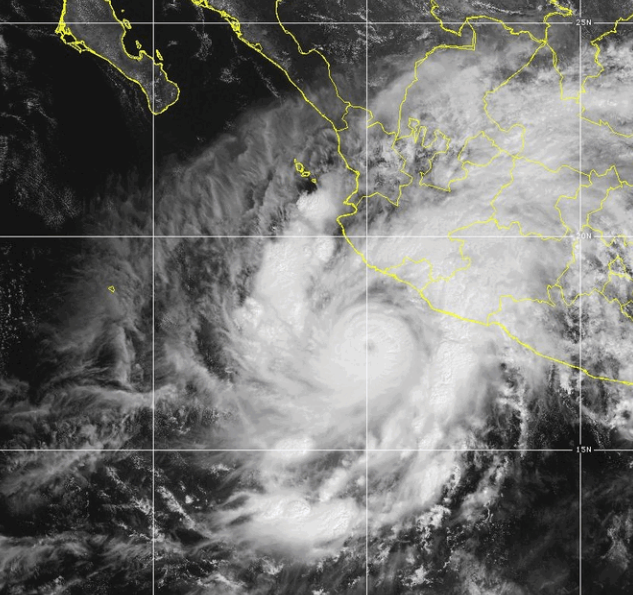
The inner end of a rainband wrapped around the existing eye and eyewall on Saturday.  Concentric eyewalls were at the center of Hurricane Simon.  The inner eyewall had a diameter of 14 miles (22 km).  The outer eyewall had a diameter of 40 miles (65 km).

Bands of showers and thunderstorms were revolving around the core of Simon’s circulation.  Storms near the core of Simon generated upper level divergence that pumped mass away from the hurricane.  The removal of mass caused the surface pressure to decrease.

The circulation around Hurricane Simon was small.  Winds to hurricane force extended out 25 miles (40 km) from the center of Simon’s circulation.  Winds to tropical storm force extended out 90 miles (145 km) from the center of Hurricane Simon.

The Hurricane Intensity Index (HII) for Hurricane Simon is 31.6.  The Hurricane Size Index (HSI) is 8.5 and the Hurricane Wind Intensity Size Index (HWISI) is 40.1.  Hurricane Simon is bigger and stronger than Hurricane Charley was when Charley hit southwest Florida in 2004.

Hurricane Simon will move through an environment favorable for intensification during the next 12 hours.  Simon will move over water where the Sea Surface Temperatures are near 30°C.  It will move under the middle of an upper level ridge that is over Mexico and the Eastern North Pacific Ocean.  The upper level ridge winds are weak near the middle of the ridge and there will be little vertical wind shear.  Hurricane Simon could weaken during the next few hours if an eyewall replacement cycle occurs, even though Simon is in a favorable environment.

Hurricane Simon will move around the western part of a high pressure system that is over Mexico.  The high pressure system will steer Simon toward the north during the next 24 hours. On its anticipated track, the center of Hurricane Simon will be near Manzanillo on Sunday morning.

Hurricane Simon will be a major hurricane when it hits the west coast of Mexico.  Simon will bring strong winds and locally heavy rain to the west coast of Mexico.  The strongest winds and heaviest rains will occur in Colima, Jalisco and Nayarit.  Heavy rain is likely to cause flash floods in some locations.  Hurricane Simon could cause a storm surge of up to 16 feet (5 meters) along parts of the west coast of Mexico.

Elsewhere over the Eastern North Pacific Ocean, Tropical Storm Rachel was moving quickly toward northern Baja California.

At 5:00 p.m. EDT on Saturday the center of Tropical Storm Rachel was located at latitude 27.0°N and longitude 118.3°W which put the center about 255 miles (415 km) southwest of Punta Baja, Mexico.  Rachel was moving toward the north-northeast at 30 m.p.h. (48 km/h).  The maximum sustained wind speed was 65 m.p.h. (105 km/h) and there were wind gusts to 80 m.p.h. (130 km/h).  The minimum surface pressure was 989 mb.

A Tropical Storm Warning is in effect for the portion of the coast from Punta Eugenia, Mexico to the Mexico/U.S. border.

A Tropical Storm Warning is in effect for the portion of the coast from Isla San Luis to Puerto Penasco, Mexico.

A Tropical Storm Watch is in effect for the portion of the coast from the U.S./Mexico border to the San Diego County/Orange County line in California.

A Tropical Storm Watch is in effect for the portion of the coast from Isla San Luis to Bahia de Los Angeles, Mexico.

A Tropical Storm Watch is in effect for the portion of the coast from Puerto Libertad to Puerto Penasco, Mexico.
Simon Intensifies to a Major Hurricane

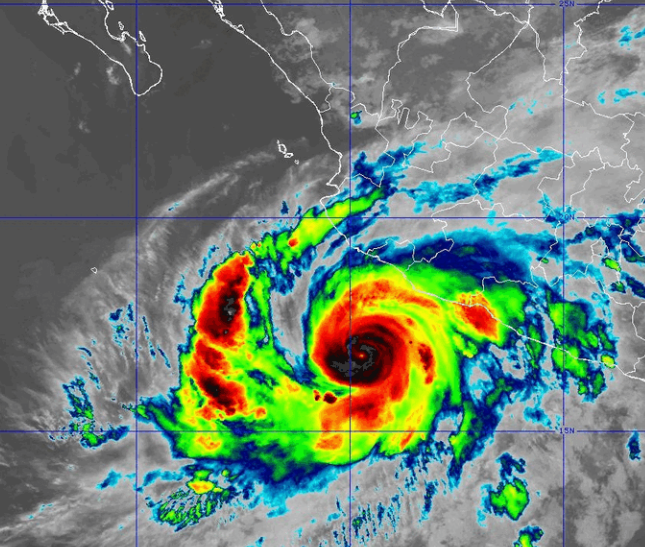
Hurricane Simon intensified to a major hurricane as it moved over the Eastern North Pacific Ocean south of Mexico on Friday.

At 11:00 p.m. EDT on Friday the center of Hurricane Simon was located at latitude 16.8°N and longitude 104.6°W which put the center about 155 miles (250 km) south of Manzanillo, Mexico.   Simon was moving toward the north at 7 m.p.h. (11 km/h).  The maximum sustained wind speed was 120 m.p.h. (195 km/h) and there were wind gusts to 140 m.p.h. (225 km/h).  The minimum surface pressure was 952 mb.

A Hurricane Warning is in effect for the portion of the coast from Punta San Telmo to Punta Mita, Mexico.  The Hurricane Warning includes Manzanillo and Puerto Vallarta.

A Hurricane Watch is in effect for the portion of the coast from Punta Mita to El Roblito, Mexico.

A Hurricane Watch is in effect for Las Islas Marias.

A Tropical Storm Watch is in effect for the portion of the coast from Punta San Telmo to Lazaro Cardenas, Mexico.

Hurricane Simon intensified to a major hurricane on Friday.

A very small eye formed at the center of Hurricane Simon.  The eye was surrounded by a ring of thunderstorms and the strongest winds were occurring in that ring of storms.  Bands of showers and thunderstorms were revolving around the center of Simon’s circulation.  Storms near the center of Simon generated upper level divergence that pumped mass away from the hurricane.  The removal of mass caused the surface pressure to decrease.

The circulation around Hurricane Simon was small.  Winds to hurricane force extended out 20 miles (30 km) from the center of Simon’s circulation.  Winds to tropical storm force extended out 80 miles (130 km) from the center of Hurricane Simon.

The Hurricane Intensity Index (HII) for Hurricane Simon is 22.1.  The Hurricane Size Index (HSI) is 6.1 and the Hurricane Wind Intensity Size Index (HWISI) is 28.2.

Hurricane Simon will move through an environment favorable for intensification during the next 24 hours.  Simon will move over water where the Sea Surface Temperatures are near 30°C.  It will move under the middle of an upper level ridge that is over Mexico and the Eastern North Pacific Ocean.  The upper level ridge winds are weak near the middle of the ridge and there will be little vertical wind shear.  Hurricane Simon will intensify during the next 24 hours.  Simon could intensify rapidly at times.  Hurricane Simon could strengthen to a Category 5 hurricane on Saturday.

Hurricane Simon will move around the western part of a high pressure system that is over Mexico.  The high pressure system will steer Simon toward the north during the next 24 hours.  Hurricane Simon will approach the west coast of Mexico between Manzanillo and Cabo Corrientes on Saturday.

Hurricane Simon is likely to be a major hurricane when it hits the west coast of Mexico.  Simon will bring strong winds and locally heavy rain to the west coast of Mexico.  The strongest winds and heaviest rains will occur in Jalisco and Nayarit.  Heavy rain is likely to cause flash floods in some locations.  Hurricane Simon could cause a storm surge of up to 16 feet (5 meters) along parts of the west coast of Mexico.

Elsewhere over the Eastern North Pacific Ocean, Tropical Storm Rachel started to move toward Baja California.  Tropical Storm Watches and Tropical Storm Warnings were issued for parts of southern California, the northern part of Baja California and northwestern Mexico.

At 11:00 p.m. EDT on Friday the center of Tropical Storm Rachel was located at latitude 23.8°N and longitude 123.3°W which put the center about 720 miles (1160 km) south-southwest of San Diego, California.  Rachel was moving toward the northeast at 9 m.p.h. (15 km/h).  The maximum sustained wind speed was 45 m.p.h. (75 km/h) and there were wind gusts to 60 m.p.h. (95 km/h).  The minimum surface pressure was 995 mb.

A Tropical Storm Warning is in effect for the portion of the coast from San Jose de Las Palomas, Mexico to the Mexico/U.S. border.

A Tropical Storm Warning is in effect for the portion of the coast from Isla San Luis to Puerto Penasco, Mexico.

A Tropical Storm Watch is in effect for the portion of the coast from the U.S./Mexico border to the San Diego County/Orange County line in California.

A Tropical Storm Watch is in effect for the portion of the coast from Isla San Luis to Bahia de Los Angeles, Mexico.

A Tropical Storm Watch is in effect for the portion of the coast from Puerto Libertad to Puerto Penasco, Mexico.

Chantal Drops Flooding Rains on North Carolina

Former Tropical Storm Chantal dropped flooding rains on parts of North Carolina on Sunday.   At 11:00 p.m. EDT on Sunday the center of Tropical Depression Chantal was located at latitude 35.9°N and longitude 78.7°W which put the center about 60 miles (95 km) southeast of Danville, Virginia.  Chantal was moving toward the northeast at 12 m.p.h. (19 km/h).  The maximum sustained wind speed was 30 m.p.h. (50 km/h) and there were wind gusts to 40 m.p.h. (65 km/h).  The minimum surface pressure was 1006 mb.

Flash Flood Warnings were in effect for Moore, Alamance, Chatham, Durham, Orange, Randolph, and Person Counties in North Carolina.

Former Tropical Storm Chantal moved northward across central North Carolina on Sunday.  Bands in the northern side of Tropical Depression Chantal dropped heavy rain over central North Carolina and south-central Virginia.

A weather station in Lumberton, North Carolina measured 4.68 inches (119 mm) of rain.

A weather station in Burlington, North Carolina measured 4.08 inches (104 mm) of rain.

A weather station in Fayetteville, North Carolina measured 2.07 inches (53 mm) of rain.

Tropical Depression Chantal will move northeast across eastern Virginia on Monday.

Flood Watches are in effect for central North Carolina and south-central Virginia.

Hilary Prompts Hurricane Warning for Baja, Tropical Storm Watch for Southern California

The potential threat from Hurricane Hilary prompted the issuance of a Hurricane Warning for part of Baja California and a Tropical Storm Watch for Southern California on Friday morning. At 11:00 a.m. EDT on Friday the center of Hurricane Hilary was located at latitude 17.9°N and longitude 111.4°W which put it about 360 miles (575 km) south-southwest of Cabo San Lucas, Mexico. Hilary was moving toward the northwest at 10 m.p.h. (16 km/h). The maximum sustained wind speed was 145 m.p.h. (230 km/h) and there were wind gusts to 170 m.p.h. (280 km/h). The minimum surface pressure was 939 mb.

A Hurricane Warning was in effect for the portion of the coast from Punta Abreojos to Punta Eugenia, Mexico. A Hurricane Watch was in effect for the portion of the coast from Punta Eugenia to Ensenada, Mexico. A Tropical Storm Warning was in effect for the portion of the coast from Punta Abreojos to Loreto, Mexico. The Tropical Storm Warning includes Cabo San Lucas. A Tropical Storm Watch was in effect for the portion of the coast from the U.S. border with Mexico to the Orange/Los Angeles County Line. The Tropical Storm Watch included Catalina Island. A Tropical Storm Watch was in effect for the portion of the coast from Ensenada, Mexico to the border with the U.S. A Tropical Storm Watch was in effect for the portion of the coast from Loreto to Huatabampito, Mexico.

Hurricane Hilary continued to intensify on Friday morning. A circular eye with a diameter of 20 miles (30 km) was at the center of Hilary’s circulation. The eye was surrounded by a ring of thunderstorms and the strongest winds were occurring in that ring of storms. Bands of showers and thunderstorms were revolving around the core of Hurricane Hilary. Storms near the core generated upper level divergence that pumped mass away from the hurricane.

The circulation around Hurricane Hilary was large. Winds to hurricane force extended out 45 miles (75 km) from the center of Hilary’s circulation. Winds to tropical storm force extended out 290 miles (465 km) from the center of circulation. The Hurricane Intensity Index (HII) was 29.9. The Hurricane Size Index (HSI) was 16.9 and the Hurricane Wind Intensity Size Index (HWISI) was 46.8. Hurricane Hilary was similar in size and intensity to Hurricane Ida when Ida hit Louisiana in 2021.

Hurricane Hilary will move through an environment favorable for a major hurricane during the next 24 hours. Hilary will move over water where the Sea Surface Temperatures are near 30°C. It will move through a region where the upper level winds are weak and there will be little vertical wind shear. Hurricane Hilary could intensify during the next 24 hours. However, if the inner end of a rainband wraps around the existing eye and eyewall, then concentric eyewalls could form. If concentric eyewalls form, then an eyewall replacement cycle could cause Hilary to weaken.

Hurricane Hilary will move around the western part of a high pressure system over Mexico and the south central U.S. The high pressure system will steer Hilary toward the north-northwest during the next 24 hours. On its anticipated track Hurricane Hilary will move toward Baja California. Hilary will move more toward the north when it reaches the western end of the high pressure system during the weekend. The center of Hurricane Hilary will be near Punta Eugenia on Sunday morning. Hurricane Hilary will start to affect Baja California on Saturday. Hilary will bring strong, gusty winds and locally heavy rain to Baja California. Heavy rain is likely to cause flash floods in some locations.

The center of Hurricane Hilary is likely to approach southern California on Sunday night. There is cooler water west of the northern part of Baja California. Hilary will be weakening when it approaches southern California. Hilary bring strong winds and locally heavy rain to parts of southern California. Heavy rain is likely to cause flash floods in some locations. Flood Watches have been issued for parts of southern California, southern Nevada, southern Utah and western Arizona.