Tag Archives: AL09

Hurricane Imelda Brings Wind and Rain to Bermuda

Hurricane Imelda brought wind and rain to Bermuda on Wednesday night.  At 11:00 p.m. EDT on Wednesday the center of Hurricane Imelda was located at latitude 32.1°N and longitude 65.0°W which put the center about 20 miles (30 km) southwest of Bermuda.  Imelda was moving toward the east-northeast at 29 m.p.h. (46 km/h).  The maximum sustained wind speed was 100 m.p.h. (160 km/h) and there were wind gusts to 120 m.p.h. (195 km/h).  The minimum surface pressure was 971 mb.

A Hurricane Warning is in effect for Bermuda.

Hurricane Imelda was in the middle of a transition to an extratropical cyclone when it reached Bermuda on Wednesday night.  The transition to an extratropical cyclone affected the structure of Hurricane Imelda.  Thunderstorms were occurring in bands in the northern side of Imelda’s circulation.  The bands in the southern half of Hurricane Imelda consisted primarily of showers and lower clouds.

The size of the circulation around Hurricane Imelda increased during the transition to an extratropical cyclone.  Winds to hurricane force extended out 45 miles (75 km) from the center of Imelda’s circulation.  Winds to tropical storm force extended out 250 miles (400 km) from the center of Hurricane Imelda.

The Hurricane Intensity Index (HII) for Hurricane Imelda was 16.5. The Hurricane Size Index (HSI) was 15.6 and the Hurricane Wind Intensity Size Index (HWISI) was 32.1.

Hurricane Imelda will continue to bring strong winds and heavy rain to Bermuda during the next few hours. The strong winds could cause electricity outages.  Heavy rain could cause flooding.

Hurricane Imelda will move through an environment unfavorable for intensification of a hurricane during the next 24 hours.  Imelda will move over water where the Sea Surface Temperatures are near 27°C.  It will move under the southern side of an upper level trough that is east of the U.S.  The upper level trough will produce strong southwesterly winds that will blow toward the top of Imelda’s circulation.  Those winds will cause strong vertical wind shear.  The strong vertical wind shear will cause Hurricane Imelda to complete a transition to a strong extratropical cyclone on Thursday.

The upper level trough east of the U.S. will steer Hurricane Imelda toward the east-northeast during the next 24 hours.  On its anticipated track, Hurricane Imelda will move quickly away from Bermuda on Thursday.

Hurricane Imelda Strengthens to Cat. 2

Hurricane Imelda strengthened to Category 2 on the Saffir-Simpson Scale on Wednesday morning.  At 11:00 a.m. EDT on Wednesday the center of Hurricane Imelda was located at latitude 31.0°N and longitude 70.4°W which put the center about 340 miles (550 km) west-southwest of Bermuda.  Imelda was moving toward the east-northeast at 20 m.p.h. (32 km/h).  The maximum sustained wind speed was 100 m.p.h. (160 km/h) and there were wind gusts to 120 m.p.h. (195 km/h).  The minimum surface pressure was 966 mb.

A Hurricane Warning is in effect for Bermuda.

Hurricane Imelda strengthened to Category 2 on the Saffir-Simpson Scale on Wednesday morning.  A circular eye with a diameter of 15 miles (24 km) was at the center of Imelda’s circulation.  The eye was surrounded by a ring of thunderstorms and the strongest winds were occurring in that ring of storms.  Bands of showers and thunderstorms were revolving around the core of Hurricane Imelda.  Storms near the core of Imelda generated upper level divergence that pumped mass away to the north and east of the hurricane.  The removal of mass caused the surface pressure to decrease.

The size of the circulation around Hurricane Imelda increased when Imelda strengthened.  Winds to hurricane force extended out 60 miles (95 km) from the center of Imelda’s circulation.  Winds to tropical storm force extended out 230 miles (370 km) from the center of Hurricane Imelda.

The Hurricane Intensity Index (HII) for Hurricane Imelda was 16.5.  The Hurricane Size Index (HSI) was 19.4 and the Hurricane Wind Intensity Size Index (HWISI) was 34.9.

Hurricane Imelda will move through an environment somewhat favorable for intensification during the next 24 hours.  Imelda will move over water where the Sea Surface Temperatures are near 28°C.  It will move under the eastern side of an upper level trough that is over the eastern U.S.  The upper level trough will produce southwesterly winds that will blow toward the top of Imelda’s circulation.  Those winds will cause moderate vertical wind shear.  The moderate vertical wind shear will inhibit intensification, but the wind shear will not be enough to prevent intensification.  Hurricane Imelda is likely to intensify during the next 24 hours. Imelda could intensify to a major hurricane.

The upper level trough over the eastern U.S. will steer Hurricane Imelda toward the east-northeast during the next 24 hours.  On its anticipated track, Hurricane Imelda will hit Bermuda on Wednesday night.

Hurricane Imelda will bring strong winds and heavy rain to Bermuda.  The strong winds could cause electricity outages.  Heavy rain could cause flooding.

Elsewhere over the Atlantic Ocean, former Hurricane Humberto merged with a front and made a transition to an extratropical cyclone.  At 11:00 a.m. EDT on Wednesday the center of former Hurricane Humberto was located at latitude 37.0°N and longitude 63.0°W which put the center about 340 miles (550 km) north-northeast of Bermuda.  Humberto was moving toward the east-northeast at 23 m.p.h. (37 km/h).  The maximum sustained wind speed was 70 m.p.h. (110 km/h) and there were wind gusts to 85 m.p.h. (135 km/h).  The minimum surface pressure was 980 mb.

Imelda Intensifies to a Hurricane

Former Tropical Storm Imelda intensified to a hurricane over the Atlantic Ocean east of Florida on Tuesday morning.  At 8:00 a.m. EDT on Tuesday the center of Hurricane Imelda was located at latitude 29.0°N and longitude 76.9°W which put the center about 755 miles (1255 km) west-southwest of Bermuda.  Imelda was moving toward the northeast at 7 m.p.h. (11 km/h).  The maximum sustained wind speed was 75 m.p.h. (120 km/h) and there were wind gusts to 90 m.p.h. (145 km/h).  The minimum surface pressure was 980 mb.

A Hurricane Watch is in effect for Bermuda.

A U.S. Air Force Reserve Hurricane Hunter plane found that former Tropical Storm Imelda had intensified to a hurricane on Tuesday morning.

The circulation around Hurricane Imelda became more symmetrical on Tuesday morning.  Thunderstorms near the center of Imelda’s circulation generated upper level divergence that pumped mass away to the north and east of the hurricane.  The removal of mass caused the surface pressure to decrease.  Bands of showers and thunderstorms were revolving around the center of Hurricane Imelda.

Winds to hurricane force extended out 70 miles (110 km) from the center of Hurricane Imelda.  Winds to tropical storm force extended out 185 miles (295 km) from the center of Imelda’s circulation.

Hurricane Storm Imelda will move through an environment somewhat favorable for intensification during the next 24 hours.  Imelda will move over water where the Sea Surface Temperatures are near 29°C.  It will move under the eastern side of an upper level trough that is over the southeast U.S.  The upper level trough will produce southerly winds that will blow toward the top of Imelda’s circulation.  Those winds will cause moderate vertical wind shear.  The moderate vertical wind shear will inhibit intensification, but the wind shear will not be enough to prevent intensification.  Hurricane Imelda will intensify during the next 24 hours.

The upper level trough over the southeast U.S. will steer Hurricane Imelda toward the east-northeast during the next 24 hours. On its anticipated track, Hurricane Imelda will affect Bermuda on Wednesday night.

Hurricane Imelda will bring strong winds and heavy rain to Bermuda.  The strong winds could cause electricity outages.  Heavy rain could cause flooding.

Elsewhere over the Atlantic Ocean, Hurricane Humberto was weakening west of Bermuda.  At 5:00 a.m. EDT on Tuesday the center of Hurricane Humberto was located at latitude 31.6°N and longitude 69.4°W which put the center about 275 miles (440 km) west of Bermuda.  Humberto was moving toward the north-northwest at 17 m.p.h. (28 km/h).  The maximum sustained wind speed was 100 m.p.h. (160 km/h) and there were wind gusts to 120 m.p.h. (195 km/h).  The minimum surface pressure was 972 mb.

Tropical Storm Imelda Strengthens

Tropical Storm Imelda strengthened on Monday morning as it moved north of the Bahamas.  At 11:00 a.m. EDT on Monday the center of Tropical Storm Imelda was located at latitude 26.9°N and longitude 77.1°W which put the center about 35 miles (55 km) north of Great Abaco Island, Bahamas.  Imelda was moving toward the north at 9 m.p.h. (15 km/h).  The maximum sustained wind speed was 60 m.p.h. (95 km/h) and there were wind gusts to 75 m.p.h. (120 km/h).  The minimum surface pressure was 988 mb.

Tropical Storm Warnings were in effect for the Northwestern Bahamas including Eleuthera, the Abacos, and Grand Bahama Island.

Tropical Storm Imelda strengthened on Monday morning.  More thunderstorms developed near the center of Imelda’s circulation. Bands of showers and thunderstorms were revolving around the center of Tropical Storm Imelda.  Storms near the center of Imelda generated upper level divergence that pumped mass away from the tropical storm.  The removal of mass caused the surface pressure to decrease.

The strongest winds were occurring in the northeastern part of Tropical Storm Imelda.  Winds to tropical storm force extended out 175 miles (280 km) in the eastern side of Imelda’s circulation.  Winds to tropical storm force extended out 90 miles (145 km) in the western side of Tropical Storm Imelda.

Tropical Storm Imelda will move through an environment favorable for intensification during the next 24 hours.  Imelda will move over water where the Sea Surface Temperatures are near 29°C.  It will move under the eastern side of an upper level trough that is over the Southeast U.S.  The upper level trough will produce southerly winds that will blow toward the top of Imelda”s circulation.  Those winds will cause some vertical wind shear.  The vertical wind shear will inhibit intensification, but the wind shear will not be enough to prevent intensification.  Tropical Storm Imelda will intensify during the next 24 hours.  Imelda could intensify rapidly at times.  Tropical Storm Imelda will intensify to a hurricane by Tuesday.

The upper level trough west of Florida will steer Tropical Storm Imelda toward the north during the next 24 hours.  On its anticipated track, Tropical Storm Imelda will remain east of South Florida.

Elsewhere over the Atlantic Ocean, Hurricane Humberto was completing an eyewall replacement cycle.  At 11:00 a.m. EDT on Monday the center of Hurricane Humberto was located at latitude 28.0°N and longitude 67.6°W which put the center about 340 miles (550 km) south-southwest of Bermuda.  Humberto was moving toward the west-northwest at 13 m.p.h. (21 km/h).  The maximum sustained wind speed was 145 m.p.h. (235 km/h) and there were wind gusts to 175 m.p.h. (280 km/h).  The minimum surface pressure was 940 mb.

A Tropical Storm Watch was in effect for Bermuda.


Depression Strengthens to Tropical Storm Imelda

Former Tropical Depression Nine strengthened to Tropical Storm Imelda over the Bahamas on Sunday afternoon.  At 2:00 p.m. EDT on Sunday the center of Tropical Storm Imelda was located at latitude 23.9°N and longitude 77.3°W which put the center about 105 miles (165 km) south of Nassau, Bahamas.   Imelda was moving toward the north at 7 m.p.h. (11 km/h).  The maximum sustained wind speed was 40 m.p.h. (65 km/h) and there were wind gusts to 50 m.p.h. (80 km/h).  The minimum surface pressure was 998 mb.

Tropical Storm Warnings were in effect for the Central Bahamas including Cat Island, the Exumas, Long Island, Rum Cay, and San Salvador.

Tropical Storm Warnings were in effect for the Northwestern Bahamas including Eleuthera, New Providence, the Abacos, the Berry Islands, Andros Island, and Grand Bahama Island.

A Tropical Storm Watch was in effect for the portion of the coast from the Palm Beach/Martin County Line to the Flagler/Volusia County Line, Florida.

A U.S. Air Force Reserve Hurricane Hunter reconnaissance plane found on Sunday afternoon that former Tropical Depression Nine had strengthened.  Based on data collected by the reconnaissance plane, the U.S. National Hurricane Center designated the system as Tropical Storm Imelda.

More thunderstorms were forming near the center of Tropical Storm Imelda on Sunday afternoon.  However, the distribution of thunderstorms in Imelda was asymmetrical.  Thunderstorms were occurring mainly in bands in the eastern side of Imelda’s circulation.  Bands in the western side of Tropical Storm Imelda consisted primarily of showers and lower clouds.

Winds to tropical storm force extended out 30 miles (50 km) from the center of Tropical Storm Imelda.

Tropical Storm Imelda will move through an environment favorable for intensification during the next 24 hours.  Imelda will move over water where the Sea Surface Temperatures are near 29°C.   It will move under the eastern side of an upper level trough that is west of Florida.  The upper level trough will produce southerly winds that will blow toward the top of Imelda”s circulation.  Those winds will cause some vertical wind shear.  The vertical wind shear will inhibit intensification, but the wind shear will not be enough to prevent intensification.  Tropical Storm Imelda will intensify during the next 24 hours.

The upper level trough west of Florida will steer Tropical Storm Imelda toward the north during the next 24 hours.  On its anticipated track, Tropical Storm Imelda will move across the Central and Northwestern Bahamas.

Tropical Storm Imelda will bring strong winds and locally heavy rain to the Central and Northwestern Bahamas.  Heavy rain could cause flash floods in some locations.

Elsewhere over the Atlantic Ocean, powerful Hurricane Humberto was passing south of Bermuda.  At 11:00 a.m. EDT on Sunday the center of Hurricane Humberto was located at latitude 24.6°N and longitude 64.3°W which put the center about 535 miles (855 km) south of Bermuda.  Humberto was moving toward the west-northwest at 13 m.p.h. (21 km/h).  The maximum sustained wind speed was 150 m.p.h. (240 km/h) and there were wind gusts to 180 m.p.h. (290 km/h).  The minimum surface pressure was 934 mb.

Hurricane Humberto Intensifies to Cat. 5

Hurricane Humberto intensified to Category 5 on the Saffir-Simpson Scale south of Bermuda on Saturday afternoon.  At 5:00 p.m. EDT on Saturday the center of Hurricane Humberto was located at latitude 22.9°N and longitude 61.1°W which put the center about 685 miles (1105 km) south-southeast of Bermuda.  Humberto was moving toward the west-northwest at 10 m.p.h. (16 km/h).  The maximum sustained wind speed was 160 m.p.h. (260 km/h) and there were wind gusts to 190 m.p.h. (305 km/h).  The minimum surface pressure was 925 mb.

Hurricane Humberto intensified to Category 5 on the Saffir-Simpson Scale on Saturday afternoon.  A circular eye with a diameter of 12 miles (19 km) was at the center of Humberto’s circulation.  The eye was surrounded by a ring of thunderstorms and the strongest winds were occurring in that ring of storms.  Bands of showers and thunderstorms were revolving around the center of Hurricane Humberto.  Storms near the center of Humberto generated strong upper level divergence that pumped large quantities of mass away from the hurricane.  The removal of large quantities of mass caused the surface pressure to decrease rapidly.

The circulation around Hurricane Humberto was very symmetrical.  Winds to hurricane force extended out 25 miles (40 km) from the center of Humberto’s circulation.  Winds to tropical storm force extended out 125 miles (200 km) from the center of Hurricane Humberto.

The Hurricane Intensity Index (HII) for Hurricane Humberto is 35.0.  The Hurricane Size Index (HSI) is 10.7 and the Hurricane Wind Intensity Size Index (HWISI) is 45.7.  Hurricane Humberto is similar in intensity to Hurricane Michael when Michael hit Northwest Florida in 2018.  Humberto is slightly smaller than Michael was.

Hurricane Humberto will move through an environment favorable for an intense hurricane during the next 24 hours.  Humberto will move over water where the Sea Surface Temperatures are near 29°C.  It will move through a region where the upper level winds are weak and the will be little vertical wind shear.  Hurricane Humberto could intensify during the next 24 hours.  However, the inner end of a rainband is likely to wrap around the existing eye and eyewall.  The formation of concentric eyewalls would start an eyewall replacement cycle.  An eyewall replacement cycle would cause Humberto to weaken, at least temporarily.

Hurricane Humberto will move around the western part of a high pressure system over the Atlantic Ocean.  The high pressure system will steer Humberto toward the northwest during the next 24 hours.  On its anticipated track, Hurricane Humberto will pass far to the south of Bermuda on Sunday.

Elsewhere over the Atlantic Ocean, Tropical Depression Nine formed north of eastern Cuba.  At 5:00 p.m. EDT on Saturday the center of Tropical Depression Nine was located at latitude 22.2°N and longitude 76.5°W which put the center about 215 miles (345 km) south-southeast of Nassau,, Bahamas.  The tropical depression was moving toward the northwest at 5 m.p.h. (8 km/h).  The maximum sustained wind speed was 35 m.p.h. (55 km/h) and there were wind gusts to 45 m.p.h. (75 km/h).  The minimum surface pressure was 1005 mb.

Tropical Storm Warnings were in effect for the Central Bahamas including Cat Island, the Exumas, Long Island, Rum Cay, and San Salvador.

Tropical Storm Warnings were in effect for the Northwestern Bahamas including Eleuthera, New Providence, the Abacos, the Berry Islands, Andros Island, and Grand Bahama Island.

A Tropical Storm Watch was in effect for the portion of the coast from the Palm Beach/Martin County Line to the Flagler/Volusia County Line, Florida.

Tropical Storm Watches and Warnings Issued for Bahamas

Tropical Storm Watches and Warnings were issued for parts of the Bahamas on Friday afternoon because of a storm developing near the western end of Cuba.  The U.S. National Hurricane Center designated the developing storm as Potential Tropical Cyclone Nine.

At 5:00 p.m. EDT on Friday the center of Potential Tropical Cyclone Nine was located at latitude 20.9°N and longitude 74.6°W which put the center about 55 miles (90 km) north-northwest of the eastern end of Cuba.  Potential Tropical Cyclone Nine was moving toward the northwest at 9 m.p.h. (15 km/h).  The maximum sustained wind speed was 35 m.p.h. (55 km/h) and there were wind gusts to 45 m.p.h. (75 km/h).  The minimum surface pressure was 1008 mb.

Tropical Storm Warnings are in effect for the Central Bahamas including Cat Island, the Exumas, Long Island, Rum Cay, and San Salvador.

Tropical Storm Watches are in effect for the Northwestern Bahamas including Eleuthera, New Providence, the Abacos, the Berry Islands and Grand Bahama Island.

A surface low pressure system started to form on Friday afternoon in the northern end of a tropical wave near the eastern tip of Cuba.  The circulation around the low pressure system was still in the early stages of organization.  More thunderstorms started to develop near the center of the low pressure system.  Other thunderstorms started to form into bands that will begin to revolve around the center of circulation.

Potential Tropical Cyclone Nine will move through an environment that will be favorable for the formation of a tropical storm during the next 24 hours.  It will move over water where the Sea Surface Temperatures are near 29°C.  It will move under the western side of an upper level ridge that is east of the Bahamas.  The upper level ridge will produce southerly winds that will blow toward the top of Potential Tropical Cyclone Nine.  Those winds will cause some vertical wind shear, but the wind shear will not be enough to prevent intensification.  Potential Tropical Cyclone Nine is likely to develop into a tropical storm on Saturday.

Potential Tropical Cyclone Nine will move around the western side of a high pressure system that is east of the Bahamas.  The high pressure system will steer Potential Tropical Cyclone Nine toward the north during the next 24 hours.  On its anticipated track, Potential Tropical Cyclone Nine will move across the Central Bahamas on Saturday night.  It will move across the Northwestern Bahamas on Sunday.

Potential Tropical Cyclone Nine will bring strengthening winds and locally heavy rain to the Central Bahamas and to the Northwestern Bahamas.

Elsewhere over the Atlantic Ocean, Hurricane Humberto rapidly intensified to a major hurricane northeast of the Leeward Islands and former Hurricane Gabrielle sped east of the Azores.

At 5:00 p.m. EDT on Friday the center of Hurricane Humberto was located at latitude 22.3°N and longitude 58.1°W which put the center about 430 miles (690 km) northeast of the Northern Leeward Islands.  Humberto was moving toward the west-northwest at 5 m.p.h. (8 km/h).  The maximum sustained wind speed was 115 m.p.h. (185 km/h) and there were wind gusts to 135 m.p.h. (215 km/h).  The minimum surface pressure was 962 mb.

At 11:00 p.m. EDT on Friday the center of former Hurricane Gabrielle was located at latitude 40.0°N and longitude 22.8°W which put the center about 245 miles (395 km) east-northeast of Lajes Air Base, the Azores.  Gabrielle was moving toward the east-northeast at 31 m.p.h. (50 km/h).  The maximum sustained wind speed was 65 m.p.h. (105 km/h) and there were wind gusts to 80 m.p.h. (130 km/h).  The minimum surface pressure was 992 mb.

Hurricane Isaac Strengthens to Cat. 2 West of the Azores

Hurricane Isaac strengthened to Category 2 on the Saffir-Simpson Scale over the North Atlantic Ocean west of the Azores on Saturday.  At 11:00 a.m. EDT on Saturday the center of Hurricane Isaac was located at latitude 40.2°N and longitude 39.7°W which put the center about 695 miles (1120 km) west-northwest of the Azores.  Isaac was moving toward the east-northeast at 20 m.p.h. (32 km/h).  The maximum sustained wind speed was 105 m.p.h. (165 km/h) and there were wind gusts to 125 m.p.h. (200 km/h).  The minimum surface pressure was 968 mb.

Even though Hurricane Isaac was at latitude 40°N, it intensified to a Category 2 hurricane on the Saffir-Simpson Scale on Saturday morning.  A circular eye was present at the center of Isaac’s circulation.  The eye was surrounded by a ring of thunderstorms and the strongest winds were occurring in that ring of storms.  Bands of showers and thunderstorms were revolving around the core of Hurricane Isaac.  Storms near the core of Isaac generated upper level divergence that pumped mass away from the hurricane.

The circulation around Hurricane Isaac was reasonably symmetrical given it high latitude.  Winds to hurricane force extended out 45 miles (75 km) from the center of Isaac’s circulation.  Winds to tropical storm force extended out 200 miles (320 km) from the center of Hurricane Isaac.

Hurricane Isaac will move through an environment unfavorable for intensification during the next 24 hours.  Isaac will move over water where the Sea Surface Temperatures are near 24°C.  It will move under the eastern side of an upper level trough that is southeast of Greenland.  The upper level trough will produce strong southwesterly winds that will blow toward the top of Isaac’s circulation.  Those winds will cause the vertical wind shear to increase.  The combination of cooler water and stronger vertical wind shear will cause Hurricane Isaac to weaken during the next 24 hours.

The upper level trough southeast of Greenland will steer Hurricane Isaac toward the east-northeast during the next 24 hours.  On its anticipated track, Hurricane Isaac will pass northwest of the Azores on Sunday.

Elsewhere, the circulation of former Hurricane Helene was spinning down south of the Ohio River and Tropical Storm Joyce was churning east of the Northern Leeward Islands.

At 11:00 a.m. EDT on Saturday the center of Tropical Depression Helene was located at latitude 36.6°N and longitude 86.4°W which put the center about 50 miles (80 km) northwest of Nashville, Tennessee.  Helene was moving toward the east at 3 m.p.h. (5 km/h).  The maximum sustained wind speed was 15 m.p.h. (25 km/h) and there were wind gusts to 25 m.p.h. (40 km/h).  The minimum surface pressure was 968 mb.

At 11:00 a.m. EDT on Saturday the center of Tropical Storm Joyce was located at latitude 20.0°N and longitude 46.0°W which put the center about 1120 miles (1805 km) east of the Northern Leeward Islands.  Joyce was moving toward the northwest at 10 m.p.h. (16 km/h).  The maximum sustained wind speed was 50 m.p.h. (80 km/h) and there were wind gusts to 65 m.p.h. (105 km/h).  The minimum surface pressure was 1004 mb.

Tropical Storm Helene Brings Heavy Rain and Floods to Southeast U.S.

Tropical Storm Helene brought heavy rain and floods to parts of the southeast U.S. on Friday.  At 11:00 a.m. EDT on Friday the center of Tropical Storm Helene was located at latitude 35.1°N and longitude 83.8°W which put the center about 30 miles (50 km) southwest of Bryson City, North Carolina.  Helene was moving toward the north at 32 m.p.h. (52 km/h).  The maximum sustained wind speed was 45 m.p.h. (75 km/h) and there were wind gusts to 60 m.p.h. (95 km/h).  The minimum surface pressure was 975 mb.

A Tropical Storm Warning is in effect for the portion of the coast from Savannah River, Georgia to Little River Inlet, South Carolina.

Tropical Storm Warnings were also in effect for inland locations in South Carolina, eastern Georgia, western North Carolina and eastern Tennessee. 

Even though former Hurricane Helene weakened to a tropical storm as it moved over the southeastern U.S. on Friday, Helene still was dropping very heavy rain.  Heavy rain fell over parts of Georgia, South Carolina, western North Carolina, eastern Tennessee, and western Virginia.  The heavy rain caused rivers and streams to rise quickly in those areas and numerous flash flood and flood warnings were issued.

The Catawba River at Pleasant Gardens, North Carolina was at Record Flood level.  The Saluda River at Greenville, South Carolina was at Major Flood level.  The French Broad River at Blantyre, North Carolina was at Record Flood level.  The Pigeon River at Canton, North Carolina was at Record Flood level.  The Pigeon River at Newport, Tennessee was at Major Flood level.  The Swannanoa River at Biltmore, North Carolina was at Record Flood level.  Numerous other rivers and streams in the region were also flooding.  Many roads were impassible.

Over four million customers in Florida, Georgia, South Carolina and North Carolina were experiencing electricity outages.

Tropical Storm Helene will move around the eastern side of an upper level low over the middle Mississippi River Valley.  The upper level low will steer Helene toward the north during the next 24 hours.  The circulation around Tropical Storm Helene will gradually merge with the circulation around the upper level low.

Tropical Storm Helene will continue to drop heavy rain on the southern Appalachians.  the heavy rain is likely to cause additional flash floods.  Helene will also bring gusty winds as far north as southern and central Ohio on Friday afternoon and evening.

Elsewhere over the Atlantic Ocean, former Tropical Storm Isaac intensified to a hurricane west of the Azores and Tropical Storm Joyce formed east of the Northern Leeward Islands.

At 11:00 a.m. EDT on Friday the center of Hurricane Isaac was located at latitude 37.4°N and longitude 46.8°W which put the center about 1080 miles (1740 km) west of the Azores.  Isaac was moving toward the east-northeast at 18 m.p.h. (30 km/h).  The maximum sustained wind speed was 75 m.p.h. (120 km/h) and there were wind gusts to 90 m.p.h. (145 km/h).  The minimum surface pressure was 981 mb.

At 11:00 a.m. EDT on Friday the center of Tropical Storm Joyce was located at latitude 18.1°N and longitude 42.9°W which put the center about 1325 miles (2130 km) east of the Northern Leeward Islands.  Joyce was moving toward the northwest at 13 m.p.h. (20 km/h).  The maximum sustained wind speed was 40 m.p.h. (65 km/h) and there were wind gusts to 50 m.p.h. (80 km/h).  The minimum surface pressure was 1006 mb.

Hurricane Helene Makes Landfall in North Florida

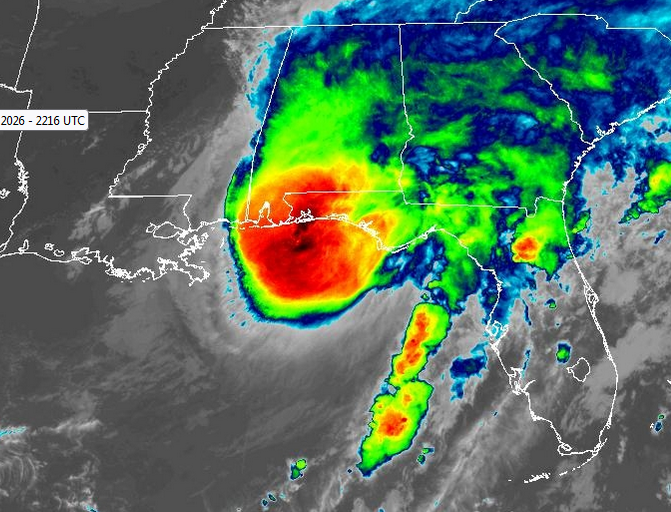
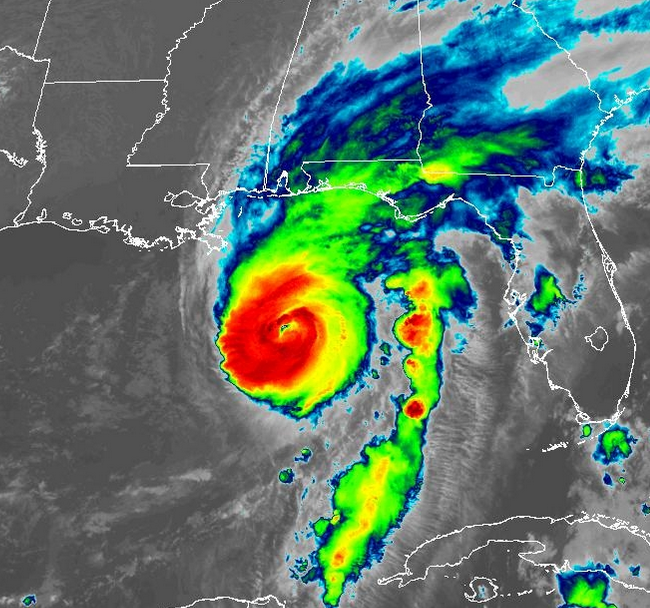
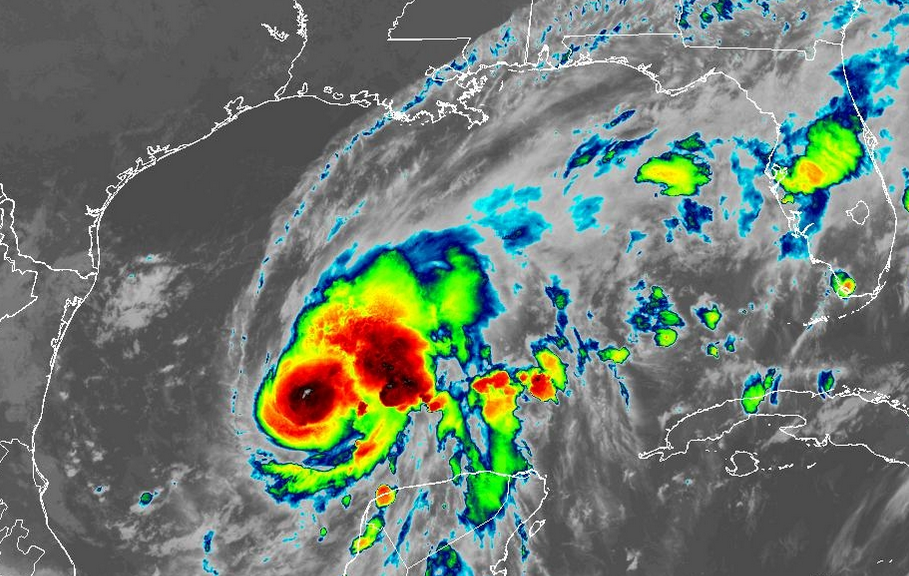
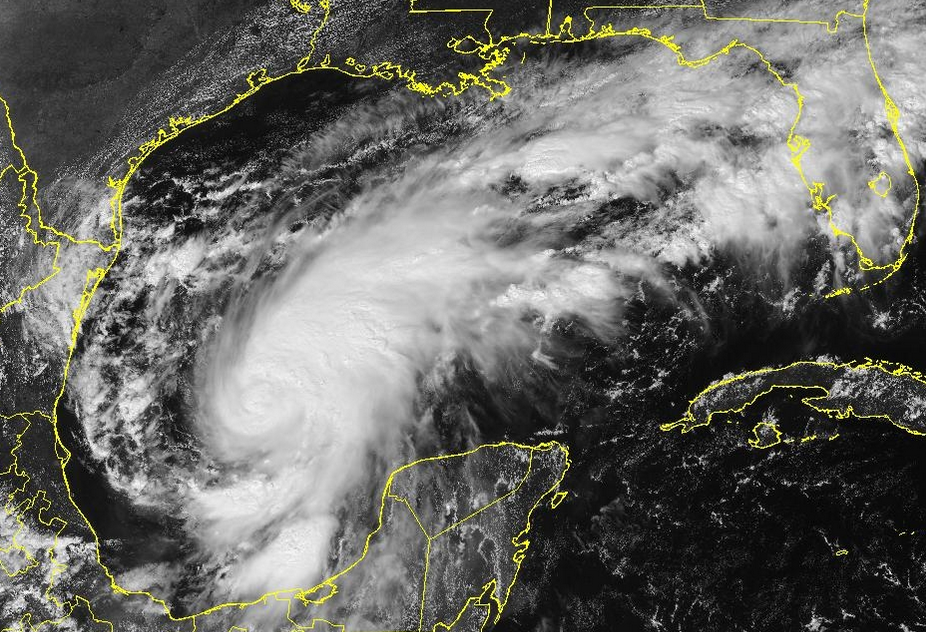
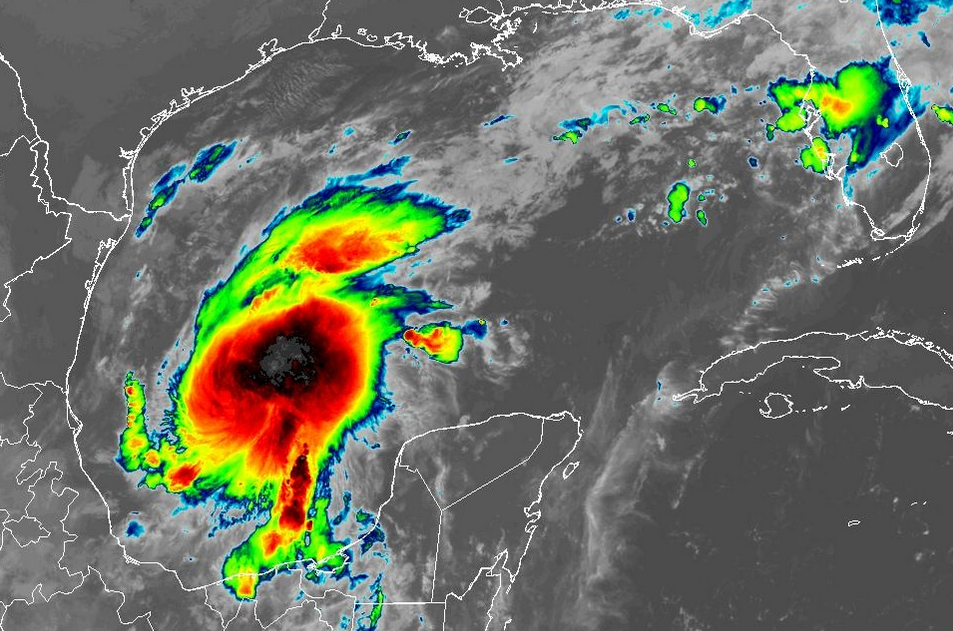
The center of Hurricane Helene officially made landfall in North Florida on Thursday night.  The center of Helene crossed the coast of Florida near the mouth of the Aucilla River west-southwest of Perry.  At 11:00 p.m. EDT on Thursday the center of Hurricane Helene was located at latitude 29.9°N and longitude 83.9°W which put the center about 40 miles (65 km) southeast of Tallahassee, Florida and about 10 miles (15 km) west-southwest of Perry.  Helene was moving toward the north-northeast at 24 m.p.h. (39 km/h).  The maximum sustained wind speed was 140 m.p.h. (225 km/h) and there were wind gusts to 165 m.p.h. (265 km/h).  The minimum surface pressure was 938 mb.

A Hurricane Warning is in effect for the portion of the coast from Anclote River to Mexico Beach, Florida.

A Hurricane Watch is in effect for the portion of the coast from Anclote River to Englewood, Florida.  The Hurricane Watch includes Tampa Bay.

A Tropical Storm Warning is in effect for the portion of the coast from Anclote River to Flamingo, Florida.  The Tropical Storm Warning includes Tampa Bay.  A Tropical Storm Warning is in effect for the Lower and Middle Florida Keys west of Channel 5 Bridge.  A Tropical Storm Warning is in effect for the Dry Tortugas.  A Tropical Storm Warning is in effect for the portion of the coast from Mexico Beach to the Okaloosa/Walton County Line, Florida.  A Tropical Storm Warning is in effect for the portion of the coast from Flamingo, Florida to Little River Inlet, South Carolina.  A Tropical Storm Warning is in effect for Lake Okeechobee. 

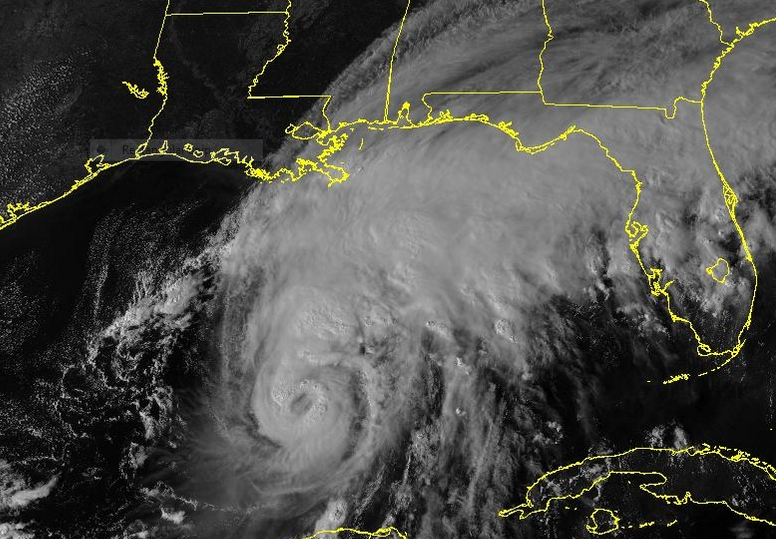
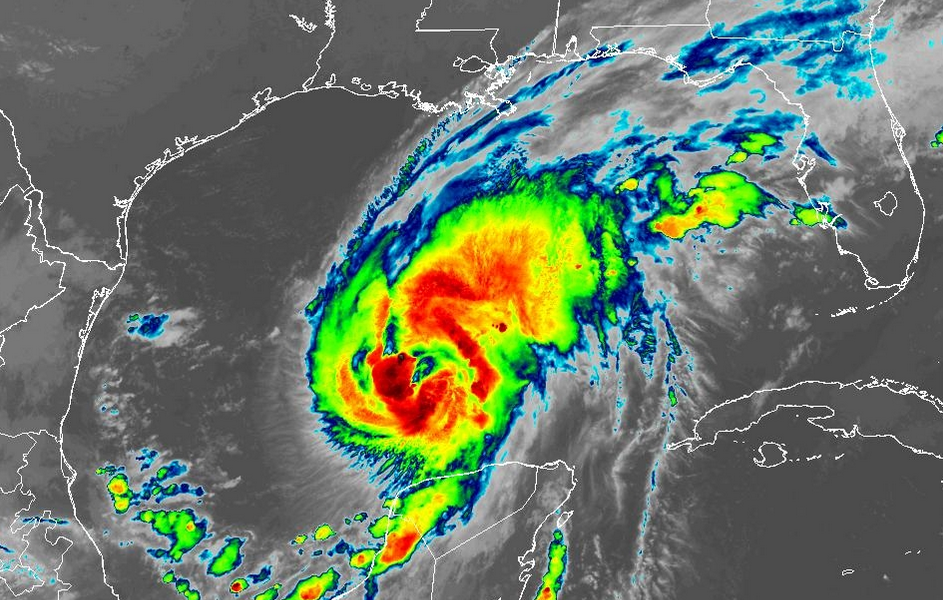
Hurricane Helene intensified to Category 4 on the Saffir-Simpson Scale before it made landfall on the coast of Florida.  A circular eye with a diameter of 32 miles (52 km) was at the center of Helene’s circulation. The eye was surrounded by a ring of thunderstorms and the strongest winds were occurring in that ring of storms. Bands of showers and thunderstorms were revolving around the center of Hurricane Helene. Storms near the center of Helene generated strong upper level divergence that pumped large quantities of mass away from the hurricane. The removal of large quantities of mass was causing the surface pressure to decrease.

The circulation around Hurricane Helene was large. Winds to hurricane force extended out 60 miles (95 km) from the center of Helene’s circulation. Winds to tropical storm force extended out 310 miles (500 km) in the eastern side of Hurricane Helene.  Winds to tropical storm force extended out 140 miles (225 km) in the western side of Helene’s circulation.

The Hurricane Intensity Index (HII) is 28.3. The Hurricane Size Index (HSI) is 21.2 and the Hurricane Wind Intensity Size Index (HWISI) 49.5.  Hurricane Helene is stronger than Hurricane Irma was when Irma hit southwest Florida in 2017.  However, Helene is not quite as big as Irma was.

Hurricane Helene will move around the eastern side of an upper level trough over the Mississippi River Valley.  The upper level trough will steer Helene quickly toward the north during the next 24 hours.  On its anticipated track, Hurricane Helene will move across Georgia on Friday.

Hurricane Warnings are in effect for parts of northern Florida, southeastern Alabama and southwestern Georgia.  The Hurricane Warnings include Tallahassee, Florida and Macon, Georgia.

Tropical Storm Warnings are in effect for the Florida Peninsula, northwest Florida eastern Alabama, northern and eastern Georgia, all of South Carolina, southwestern North Carolina, and southeastern Tennessee.  The Tropical Storm Warnings include Atlanta, Georgia and Charleston, South Carolina.

Hurricane Helene will weaken gradually as it moves farther inland.  Hurricane Helene will bring strong winds and heavy rain to Georgia on Friday.  Heavy rain will also fall over the southern Appalachians.  Heavy rain is likely to cause flash floods.

Flood Watches are in effect for Florida, eastern Alabama, Georgia, western South Carolina, western North Carolina and eastern Tennessee.

Hurricane Helene will continue to cause a storm surge along the west coast of Florida during the next few hours.

A Storm Surge Warning is in effect for the portion of the coast from Mexico Beach to Flamingo, Florida.  The Storm Surge Warning includes Tampa Bay and Charlotte Harbor.